
How to Stop a Dog Chewing Everything (Force-Free)
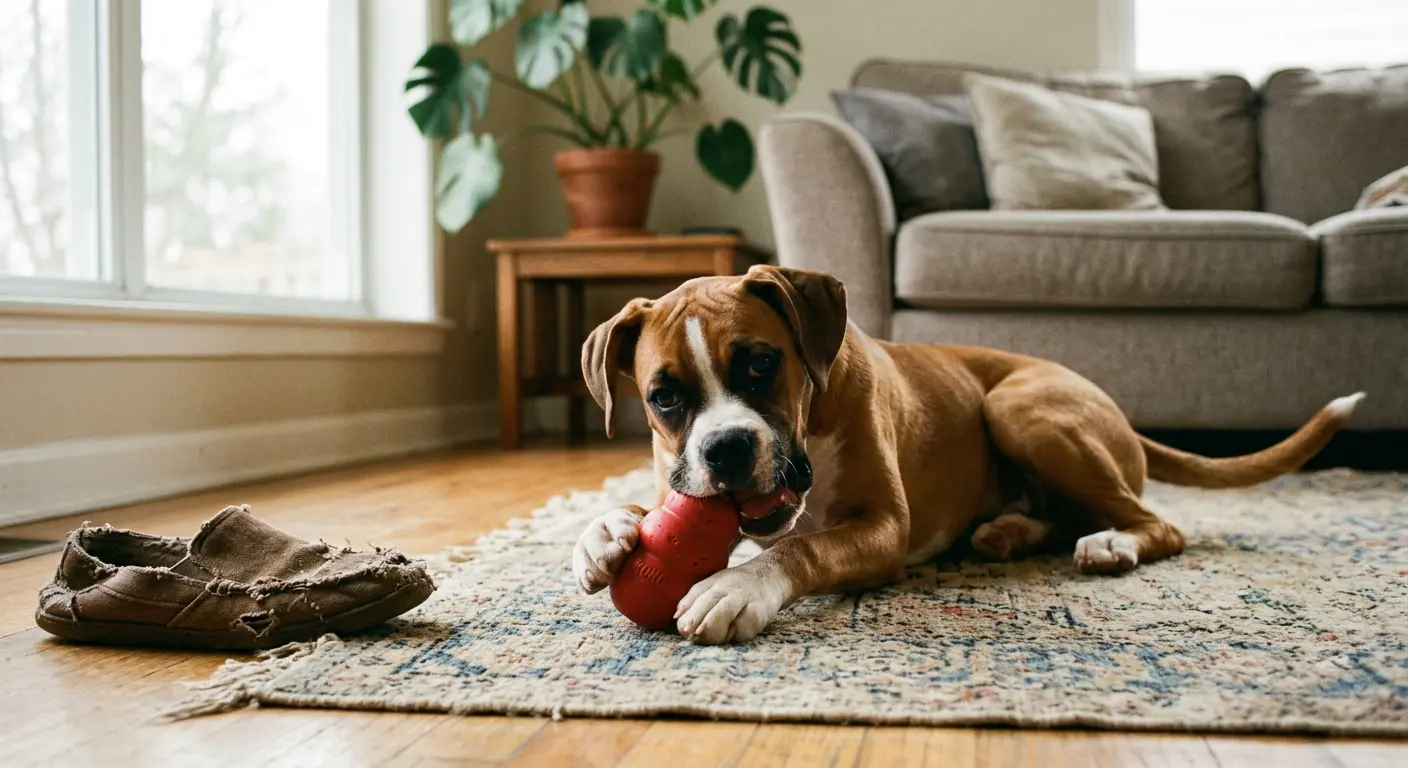
You come home to a shredded cushion, a chewed table leg, or the sad remains of one favorite shoe. It’s frustrating — and it’s easy to take personally. But here’s the reframe that changes how you fix it: your dog isn’t chewing to spite you, and it isn’t “being bad.” Chewing is a normal, necessary dog behavior. The job isn’t to stop your dog chewing — it’s to give that chewing somewhere better to go, and to fix the reason it’s landing on your furniture.
Chewing is normal — destroying the house is a clue
All dogs chew. It’s how they explore the world, keep their jaws and teeth healthy, and calm themselves down — a good chew session actually lowers a dog’s arousal, a bit like a stress ball for humans. Puppies chew even more, because they explore with their mouths and because teething hurts.
So the goal was never a dog that never chews. The goal is a dog who chews the right things. When chewing turns destructive, it’s almost always telling you one of two things: your dog doesn’t have good enough outlets, or something in their day (boredom, energy, anxiety, or plain teething pain) is driving them to chew more than usual. Find that driver and the destruction fades on its own.
Why is my dog chewing everything? The usual causes
Match the cause to what you’re seeing — the fix is different for each.
| Likely cause | Tell-tale signs | What actually helps |
|---|---|---|
| Teething (puppies ~3–7 months) | Young pup, gnawing everything, sore gums, extra drool | Frozen chew toys, damp frozen washcloth, patience — it passes |
| Boredom / too little exercise | Adolescent or high-energy dog, chews most when left alone or under-walked | More physical and mental exercise; food puzzles; better chews |
| Anxiety (often separation) | Chewing focused around exits, only when alone, with pacing/drool/whining | Treat the anxiety, not the chewing — see below |
| Not enough appropriate outlets | Chews furniture but ignores boring toys | A rotation of genuinely appealing chews, always within reach |
| Attention-seeking | Grabs your things, then looks at you and bolts | Manage access; reward calm; don’t turn the chase into a game |
| Hunger / diet | Chews and gnaws around mealtimes, targets kitchen items | Check the diet is complete and portions are right with your vet |
Notice what’s not on the list: dominance, spite, or revenge. Dogs don’t plan payback — they act on how they feel in the moment.
What to do about it
You don’t need all of these. Pick the ones that fit your dog’s cause — but the first four help almost every chewer.
1. Manage the environment while you teach
You can’t train a habit your dog is busy rehearsing all day. Until the new habits stick, prevent the practice: clear tempting items out of reach, use a playpen, baby gate or a comfortable crate when you can’t supervise, and give young dogs the run of the house only once you trust them. This isn’t forever — it’s scaffolding while the good habits build.
2. Give better things to chew — and make them appealing
A dog surrounded by dull, always-available toys will pick your warm, interesting sofa every time. Offer a variety of safe chews and rotate them so they stay novel:
- Sturdy rubber toys you can stuff with food and freeze
- Appropriately sized chew toys and natural chews suited to your dog
- Food puzzles and snuffle mats that make chewing work for something
Keep a good chew in every room your dog relaxes in, so the right choice is always the easy one.
⚠️ Chew safety: pick chews sized for your dog and softer than their teeth — anything rock-hard (real bones, antlers, hard nylon) can crack teeth. Skip cooked bones entirely, supervise new chews, and bin any piece small enough to swallow. When unsure, ask your vet.
3. Meet the need for exercise — body and brain
A huge share of “destructive” chewing is simply an under-stimulated dog with time to fill. Most dogs need more than a stroll: a proper sniff-heavy walk, some running or play, and — just as important — mental work. Ten minutes of training, a food puzzle, or a scatter-feed in the garden tires a dog more than another lap of the block. A satisfied dog chews their toy and sleeps; a bored one redecorates.
4. Teach “swap” instead of chasing
When you catch your dog with the wrong item, don’t chase or scold — that either starts a fun game or teaches them to hide and chew in secret. Instead, calmly trade: offer a treat or a favorite chew, and the moment they drop your thing, praise and hand over the good one. Your dog learns that giving something up brings something better, which also builds a rock-solid “drop it” for emergencies.
Why punishment backfires
Scolding, “alpha” corrections, or rubbing a dog’s nose in the damage don’t work — and they make things worse. Dogs can’t connect punishment to a chew that happened hours ago; all they learn is that you are unpredictable and sometimes scary. That raises stress, and stress is itself a top cause of chewing. Force-free management and redirection fix the behavior without any of that fallout.
When chewing is really about anxiety
If the damage happens only when your dog is home alone — especially near doors and windows, alongside pacing, drooling, howling or accidents — you’re likely looking at separation-related anxiety, not a chewing problem. No amount of chew toys fixes that, because chewing is the symptom, not the cause. Work on the underlying anxiety gradually and gently instead. Our guide on dog separation anxiety walks through it.
🩺 Check with your vet if your dog swallows non-food objects (rocks, fabric, plastic), chews suddenly and intensely as an adult, or you suspect anything was swallowed — obstructions are an emergency. Persistent eating of non-food items (pica) is worth a vet conversation too.
The bottom line
Destructive chewing isn’t misbehavior — it’s an unmet need showing up in the worst possible place. Manage the environment, offer chews your dog actually wants, tire out both body and brain, and trade instead of scold. Do that and the shredded cushions quietly stop.
Redirect the chewing — with Ruffy
Most chewing problems come down to two fixable things: not enough enrichment, and no reliable “drop it” or “leave it”. The Ruffy app builds both — force-free, in a few minutes a day — with brain-tiring enrichment ideas and step-by-step impulse-control games that turn “give me that!” panic into a calm, happy swap.
Download Ruffy free and give your dog better things to do than eat the sofa. 🐾
Keep reading
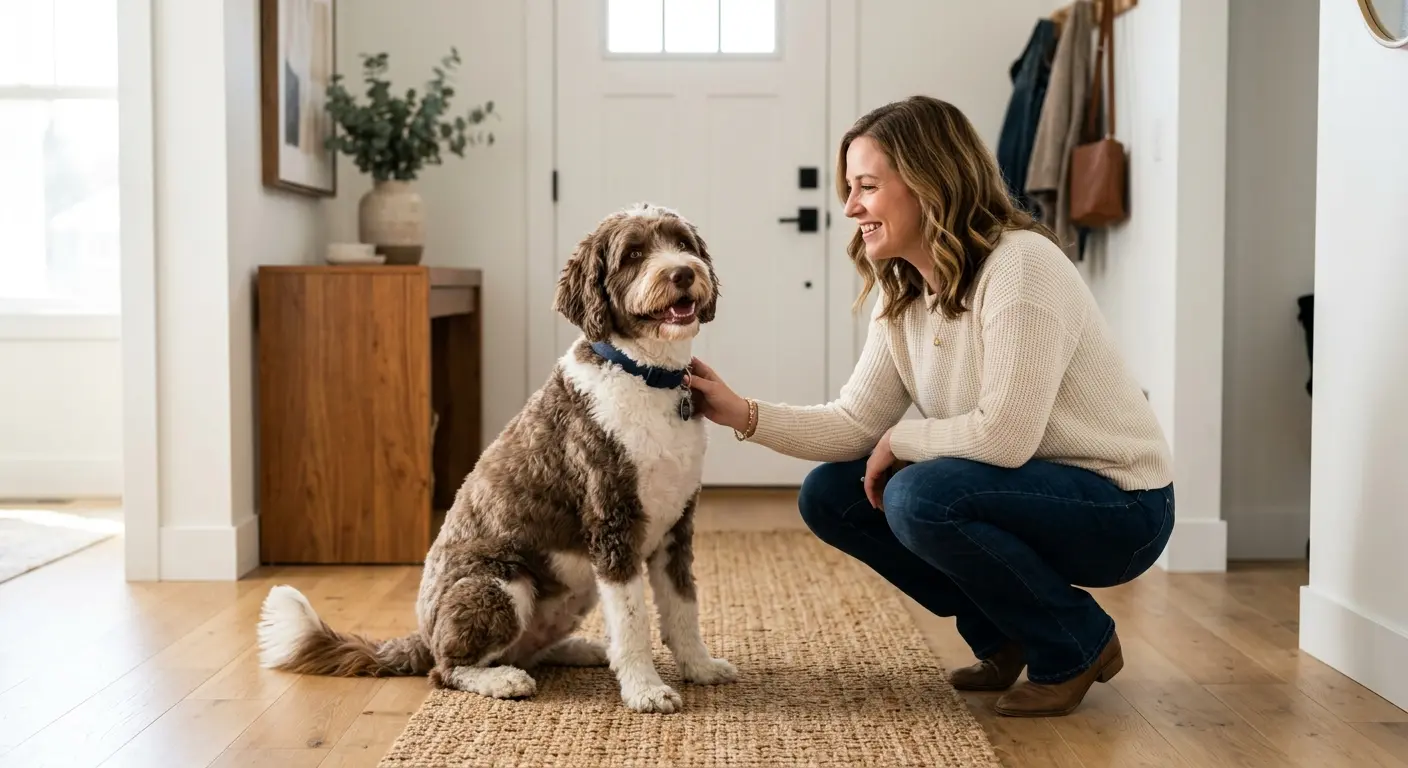
How to Stop Your Dog Jumping Up on People (Force-Free)
Dogs jump up to greet us — it's excitement, not bad manners. A calm, force-free guide to why it happens and how to teach four paws on the floor, at the door and everywhere else.
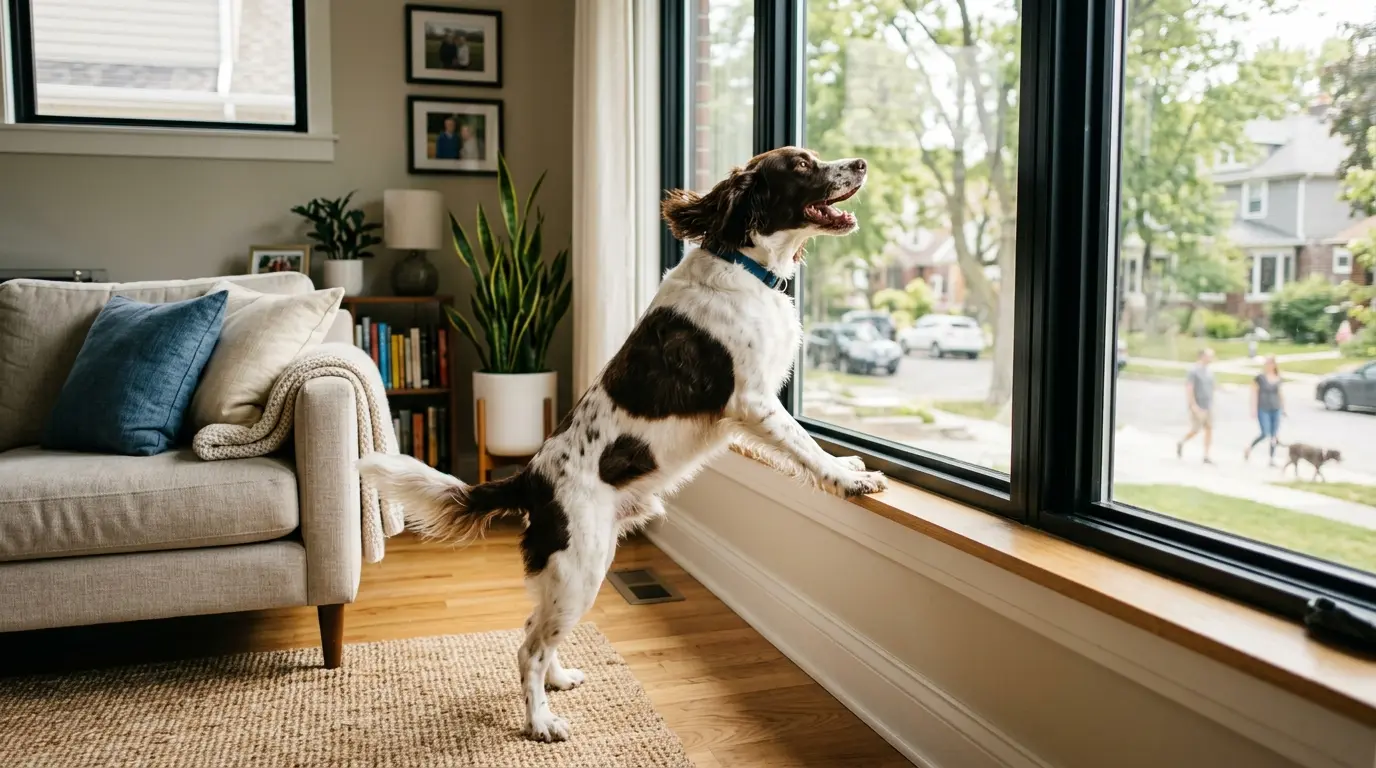
Why Does My Dog Bark So Much? (And How to Stop It)
Dogs bark for a reason — boredom, alarm, attention, anxiety, or frustration. A force-free guide to figuring out why your dog barks and what actually quiets each kind of barking.
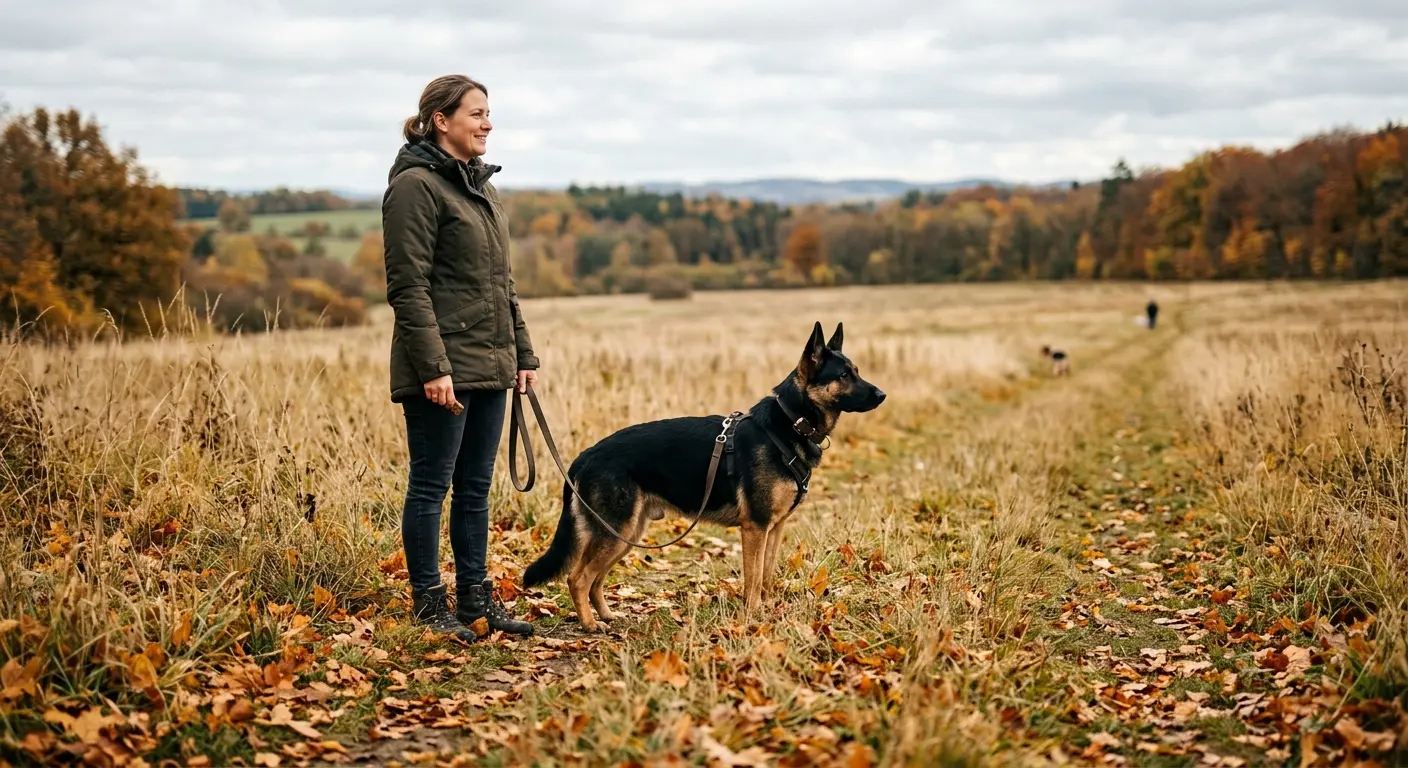
Why Does My Dog Bark and Lunge at Other Dogs on Walks?
Leash reactivity explained: why some dogs bark, lunge and pull at other dogs on lead, what makes it worse, and a calm, force-free plan to help them cope.