
Why Does My Dog Bark and Lunge at Other Dogs on Walks?
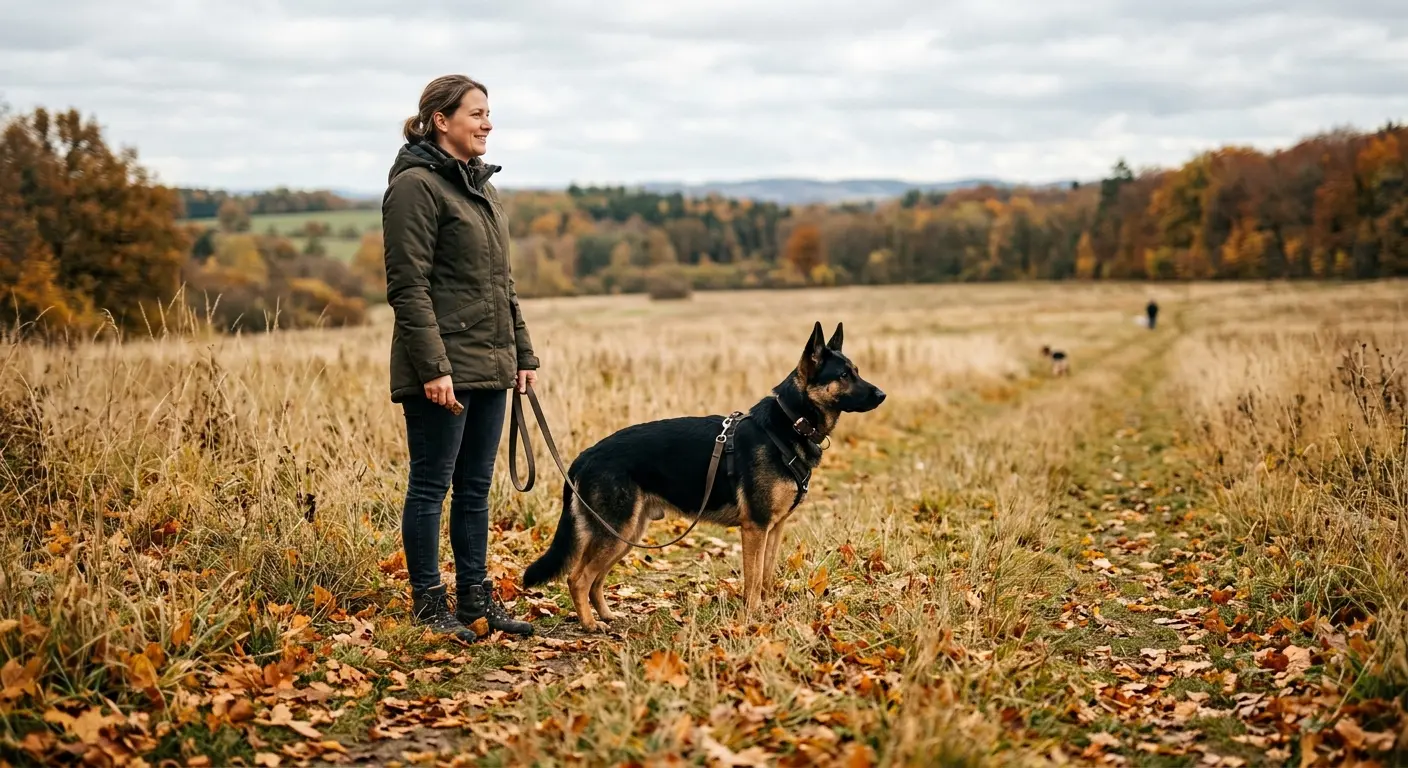
If your dog turns into a barking, lunging whirlwind the moment another dog appears on a walk, you are not alone—and your dog is not “bad” or “dominant”. This is called leash reactivity, and it is one of the most common reasons owners look for help.
The good news: it is very treatable. The key is understanding why it happens, because the fix follows directly from the cause.
What leash reactivity actually is
Reactivity is an over-the-top emotional response to something your dog sees—most often other dogs, but sometimes people, bikes or cars. The barking and lunging are the visible part. Underneath, your dog is feeling something big and doesn’t have a better way to cope.
Many reactive dogs are perfectly friendly off lead, at daycare or with dogs they know. That’s a strong clue that the leash itself is part of the problem.
Why it happens
Most reactive dogs fall into one (or a mix) of these groups:
| What’s going on | What it often looks like | What the dog is “saying” |
|---|---|---|
| Fear | Barks, then backs away; tail low, ears back; may hide behind you | ”Go away, I can’t escape!” |
| Frustration | Whines, pulls hard toward the dog, tail up; fine once they meet | ”I want to say hello and I can’t!” |
| Past bad experience | Reacts to a certain size, colour or breed of dog | ”Last time this went badly.” |
| Stress stacking | Fine some days, explosive on others | ”I’ve had too much already today.” |
Why the leash makes it worse
On a lead, a dog can’t choose distance. Off lead, a nervous dog would simply curve away, sniff the ground or avoid eye contact. On a tight leash, those options disappear, so the dog reaches for the one that works: making the other dog go away by being loud and big.
And it does work, from the dog’s point of view. The other dog passes and leaves. Every repetition teaches your dog that barking solves the problem.
Two other things quietly feed the cycle:
- Leash tension. When we see a dog coming, we tense up and shorten the lead. Your dog feels that tension and learns “other dogs mean trouble”.
- Head-on approaches. Pavements force dogs to walk straight at each other with direct eye contact—rude and threatening in dog language.
What not to do
It’s natural to want to stop the noise fast, but some common reactions make reactivity worse:
- Don’t punish, yank or scold. Your dog learns that other dogs predict both the scary thing and pain or anger from you. The barking may stop, but the fear grows—and dogs that are punished for warning can escalate to biting without warning.
- Don’t force greetings “so they get used to it”. Flooding a frightened dog rarely helps and often backfires.
- Don’t keep walking closer hoping it will pass. If your dog is already reacting, they can’t learn anything.
The plan: change how your dog feels
The goal is not to suppress the barking. It is to change your dog’s emotional response so that seeing another dog means “something good is about to happen”. This approach is called counter-conditioning, and it is the backbone of modern, force-free reactivity training.
1. Find your dog’s threshold
Every reactive dog has a threshold distance: the point where they notice another dog but can still eat a treat, sniff and respond to you. Closer than that, they “go over” and react.
For some dogs that’s 10 metres; for others it’s the other side of a park. Note the distance where your dog can look at another dog and still take food. All training happens at or beyond that distance.
2. Play “look at that”
- At a safe distance, the moment your dog sees another dog, say a marker word (“Yes!”) or click.
- Immediately give a high-value treat—chicken, cheese, something better than their usual kibble.
- When the other dog disappears, the treats stop.
Repeat this every time. Within days to weeks, many dogs start seeing another dog and turning to you expectantly. That glance back is exactly what you want—it means the emotion is shifting.
3. Shrink the distance slowly
Only move closer when your dog is relaxed and eagerly turning back to you at the current distance. If your dog barks or stops taking food, you’ve moved too fast—simply add distance and keep going. A reaction isn’t a failure; it’s information.
4. Give your dog an exit plan
Teach a cheerful U-turn cue at home (“This way!”) and reward heavily. On walks, use it the moment an approach is too close. Crossing the road, stepping behind a parked car or curving in a wide arc are all great options too.
Make walks easier while you train
Training works best when your dog isn’t practising the reaction every day. While you work on it:
- Walk at quieter times or in quieter places—early mornings, industrial estates, wide fields.
- Use a comfortable harness so lunges don’t put pressure on the neck. (See our guide to harnesses vs collars.)
- Keep the leash loose and breathe out when you spot a dog. Your calm helps theirs.
- Add decompression days. Sniffy walks, scatter feeding and rest help lower overall stress, so reactions are less likely.
- Skip the walk on bad days. A day of games at home is better than a walk full of reactions.
When to get extra help: If your dog has bitten, redirects onto you or other people when frustrated, or reacts so strongly that you can’t find a workable distance, contact a qualified force-free behaviourist or a veterinary behaviourist. Sudden reactivity in a previously relaxed dog can also be linked to pain, so a vet check is a good first step.
How long does it take?
Most owners see a real difference within 4–8 weeks of consistent, below-threshold practice, though it varies a lot from dog to dog. Progress usually looks like:
- shorter, quieter reactions;
- faster recovery afterwards;
- your dog noticing other dogs at closer distances without exploding;
- your dog checking in with you by choice.
Some dogs end up happily passing other dogs on a narrow path. Others will always need a bit more space—and that’s okay. Success is a dog who feels safe, not one who has to love every dog they meet.
Short, calm sessions add up. Ruffy can help you practise the building blocks—marker words, attention, U-turns and loose-leash walking—in a few minutes a day, so you have the right tools ready for the next dog that turns the corner.
Keep reading
Dog Separation Anxiety: Why It Happens and How to Help
Does your dog panic when left alone? A calm, force-free guide to spotting real separation anxiety, telling it apart from boredom, and gently teaching your dog that being alone is safe.

Why Is My Dog Scared of Fireworks? (And How to Help)
Why fireworks terrify so many dogs — and what actually helps. A calm, force-free guide to preparing your home, soothing your dog in the moment, and easing the fear long term.
Dog Harness vs Collar: Which Is Better for Walks and Training?
Compare dog harnesses and collars for comfort, safety, loose-leash training and everyday use—and learn when using both makes sense.