
How Much Exercise Does My Dog Need Each Day?
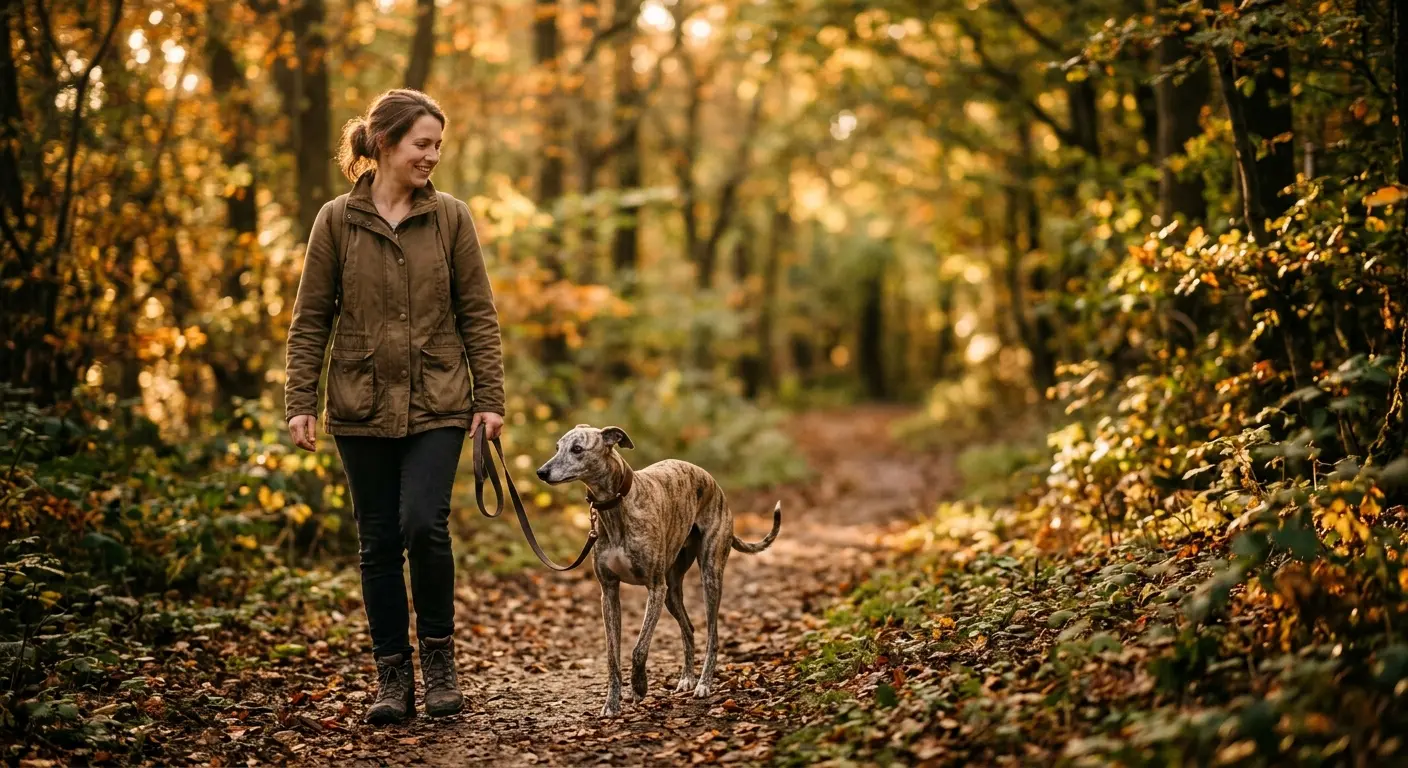
The honest answer is: enough to leave your dog pleasantly tired, not exhausted. For many healthy adult dogs that means roughly 60–90 minutes of activity across the day, but age, health, breed type and personality matter more than a universal number.
Exercise is not just a fast walk. Sniffing, exploring, training and play work the brain as well as the body—and often produce a calmer dog than adding another kilometre.
A useful starting point
| Life stage | A sensible daily pattern |
|---|---|
| Puppy | Several short, self-paced walks and play sessions, with lots of sleep |
| Healthy adult | Usually 60–90 minutes split across two or more outings, adjusted to the individual |
| Senior | Shorter, gentler outings more often; keep sniffing and mobility work |
| Flat-faced, injured or unwell dog | A plan agreed with your vet, especially in heat |
These are starting points, not quotas. A small terrier may want far more activity than a large, laid-back dog. Young puppies should not be pushed through repetitive running or long forced marches while their bodies are developing.
Quality matters more than distance
A balanced day might include a relaxed sniff walk, five minutes of reward-based training, a game of tug and a food puzzle. Let your dog stop and investigate smells. That is meaningful mental work, not wasted walking time.
Build fitness gradually. If your dog has been doing 20-minute walks, do not jump straight to a two-hour hike. Increase duration or intensity a little at a time, offer water and rest, and avoid hard exercise in hot weather.
Signs your dog may need more
- Restlessness or difficulty settling despite enough sleep
- Constantly demanding play or inventing destructive entertainment
- Weight gain without a dietary explanation
- Bursts of frantic energy that improve after appropriate activity
These signs can also have medical or behavioural causes. More exercise is not the answer to every problem, and an overtired dog can look hyperactive too.
Signs you may be overdoing it
Slow down if your dog lags behind, lies down, pants unusually hard, becomes stiff later, wears their paw pads, or is reluctant to go out the next day. Stop immediately for weakness, confusion, vomiting, collapse, or very red or pale gums, and contact a vet.
Find your dog’s right amount
Keep a simple one-week note of walks, play, sleep and behaviour. Change one thing at a time and watch how your dog recovers. Ruffy can help you turn short training and enrichment sessions into part of that daily rhythm. The best plan is not the one with the biggest number—it is the one your dog can enjoy, recover from and look forward to tomorrow.
Keep reading
Dog Harness vs Collar: Which Is Better for Walks and Training?
Compare dog harnesses and collars for comfort, safety, loose-leash training and everyday use—and learn when using both makes sense.
Why Does My Dog Eat Poop? (And How to Stop It, Kindly)
It's gross, but it's common and rarely a sign of something sinister. Here's what the science says about why dogs eat poop — their own, the cat's, or a horse's — plus the vet checks worth doing and the force-free way to stop it.
Why Does My Dog Eat Grass? (And When to Worry)
Grass eating is one of the most common — and most misunderstood — dog behaviors. What the science actually says, when it's harmless, and the few signs that mean a vet visit.