
How to Teach Your Dog to Settle on a Mat
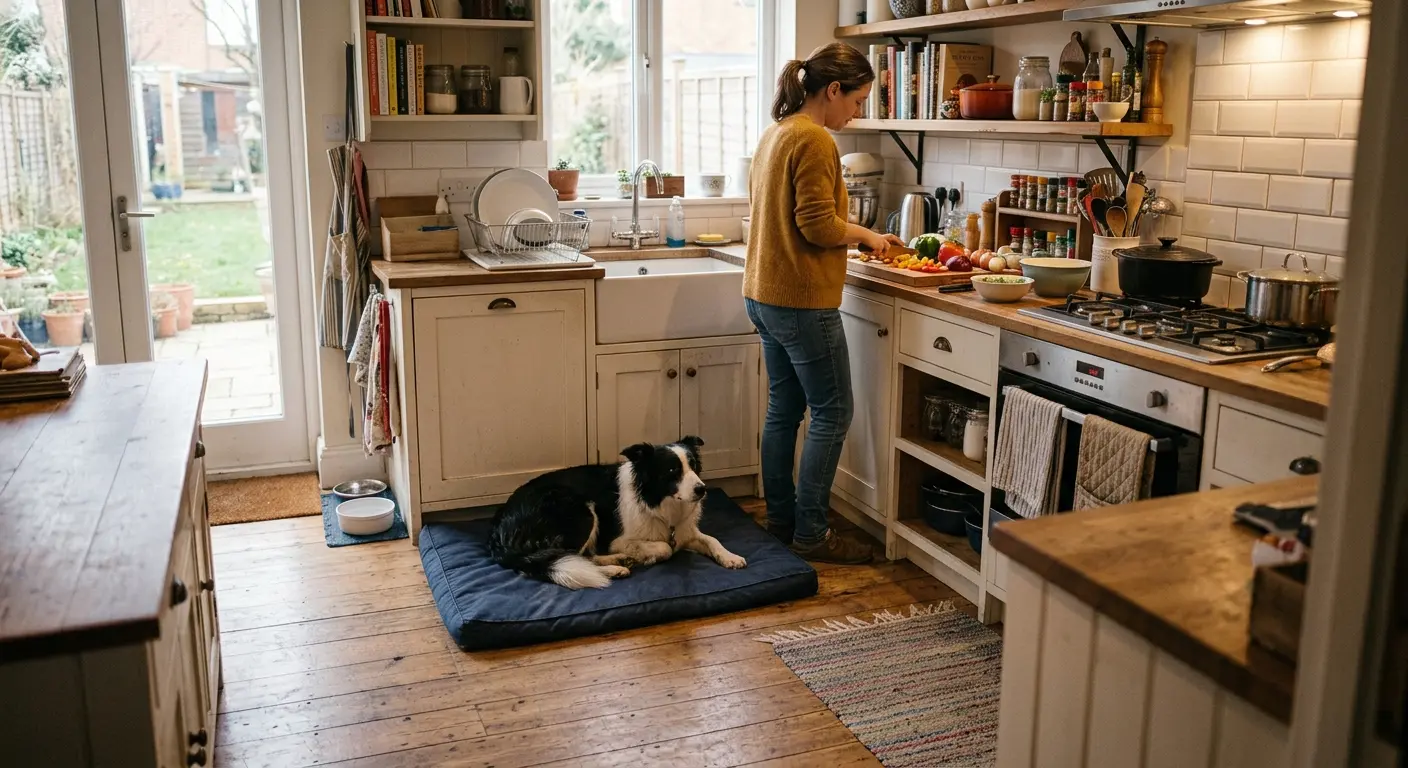
A settle on a mat is not a command to make a dog do nothing. It is a clear, comfortable job: go to this spot, relax here, and good things happen. It is useful while you cook, answer the door, visit friends, or sit at a dog-friendly café.
The mat should always predict safety and rewards—not isolation or a time-out. Start somewhere quiet, keep sessions short, and let your dog choose to participate.
Start by making the mat valuable
Put down a non-slip mat or small bed. The moment your dog looks at it, steps on it, or sniffs it, mark that choice with a cheerful “yes” or click and place a treat on the mat. Do this five to ten times.
When your dog is confidently stepping onto it, wait for a sit or a lie-down. Feed several small treats between their paws while they remain there, then toss one away to reset. Returning to the mat becomes the game.
Add your cue after the behaviour is easy
Once your dog heads to the mat as soon as it appears, say your cue—“mat,” “place,” or “settle”—just before they step onto it. Mark and reward on the mat. Say the cue once; it is information, not a warning.
Use a release word such as “free” before you invite your dog away. A release tells them they do not have to guess when the exercise has ended.
Build calm time in tiny pieces
At first, reward every few seconds. Then vary the gap: 3 seconds, 5, 2, 8. Give treats calmly and low, between the paws, so you are rewarding relaxation rather than excitement. End while your dog is still comfortable.
If they get up, do not repeat the cue or push them back. Simply make the next repetition easier—shorter, quieter, or with a better reward. Leaving the mat is useful feedback, not defiance.
Use it in real life gradually
Practise one new challenge at a time:
- Sit in a chair beside the mat.
- Take one step away and return to reward.
- Prepare a quiet meal or answer the door after putting the mat at a safe distance.
- Bring the mat to a calm patio or a friend’s house.
New places are much harder than the living room. Start again with frequent rewards there, and keep the mat far enough from people, dogs, and traffic that your dog can truly relax. Never use it to keep a worried dog trapped near something frightening.
When to pause and get help
Panting when it is not warm, frantic scanning, whining, repeated attempts to leave, or refusing food can mean your dog is overwhelmed. Reduce the challenge. If settling is difficult across many situations, or your dog seems anxious, a force-free accredited trainer or your vet can help you work out why.
With a little practice, the mat becomes portable calm: a familiar place your dog understands wherever you go. Ruffy can turn that foundation into short, reward-based sessions that progress at your dog’s pace. 🐾
Keep reading
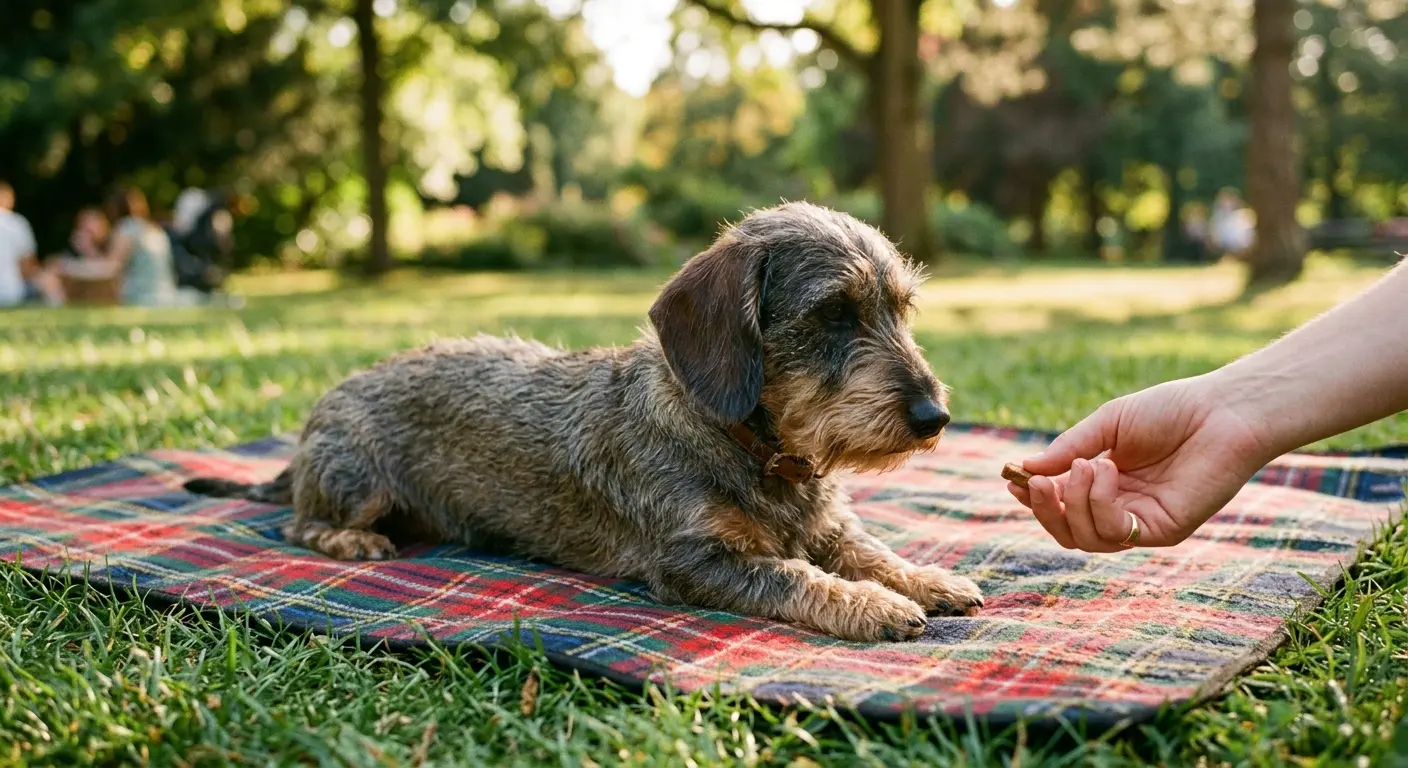
How to Teach Your Dog to Lie Down (the 'Down' Cue)
Down is the calm off-switch of dog training — for the vet, the café, the front door. Here's the force-free way to lure it, fade the treat, and add the word so it actually holds.
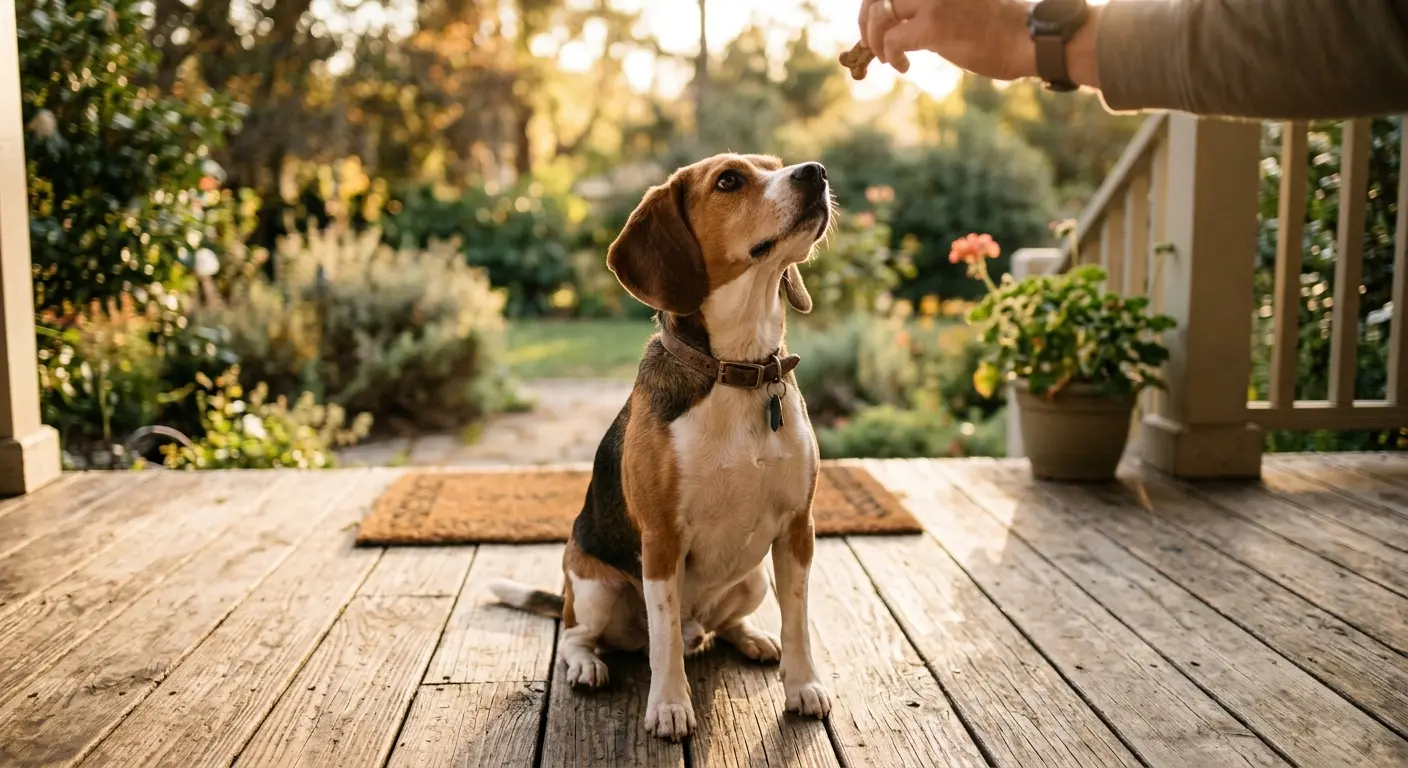
How to Teach Your Dog to Sit (Without Pushing on Their Bottom)
Sit is the first cue most dogs learn — and the one people teach with the least reliable method. Here's the force-free way to get a fast, happy sit in a few short sessions, and how to make it stick.
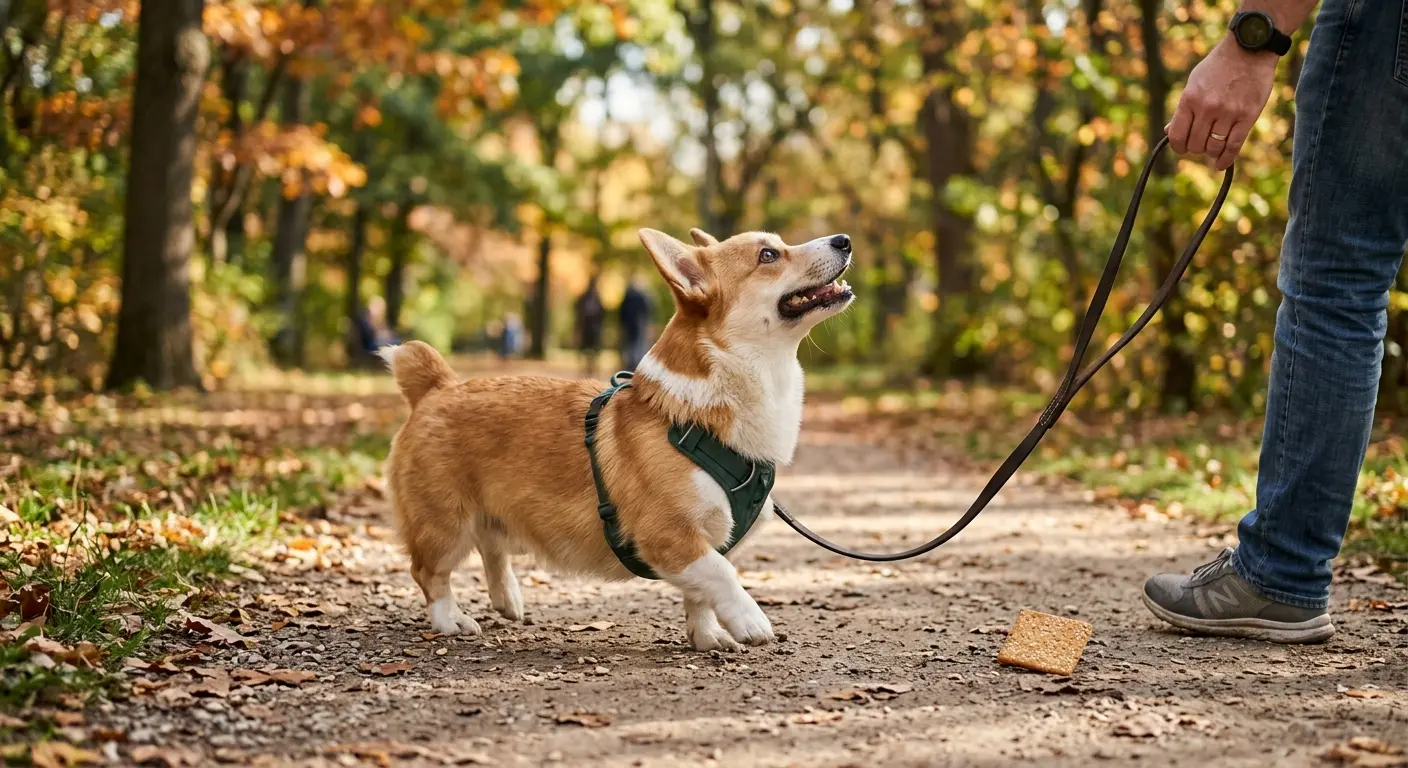
How to Teach Your Dog to 'Leave It' (a Cue That Can Save Their Life)
Dropped pills, chicken bones on the pavement, something dead in the grass — 'leave it' is the cue that stops your dog before they grab it. Here's the force-free way to build it, and why it works better than snatching things away.