
How to Clicker Train Your Dog: A Simple Beginner’s Guide
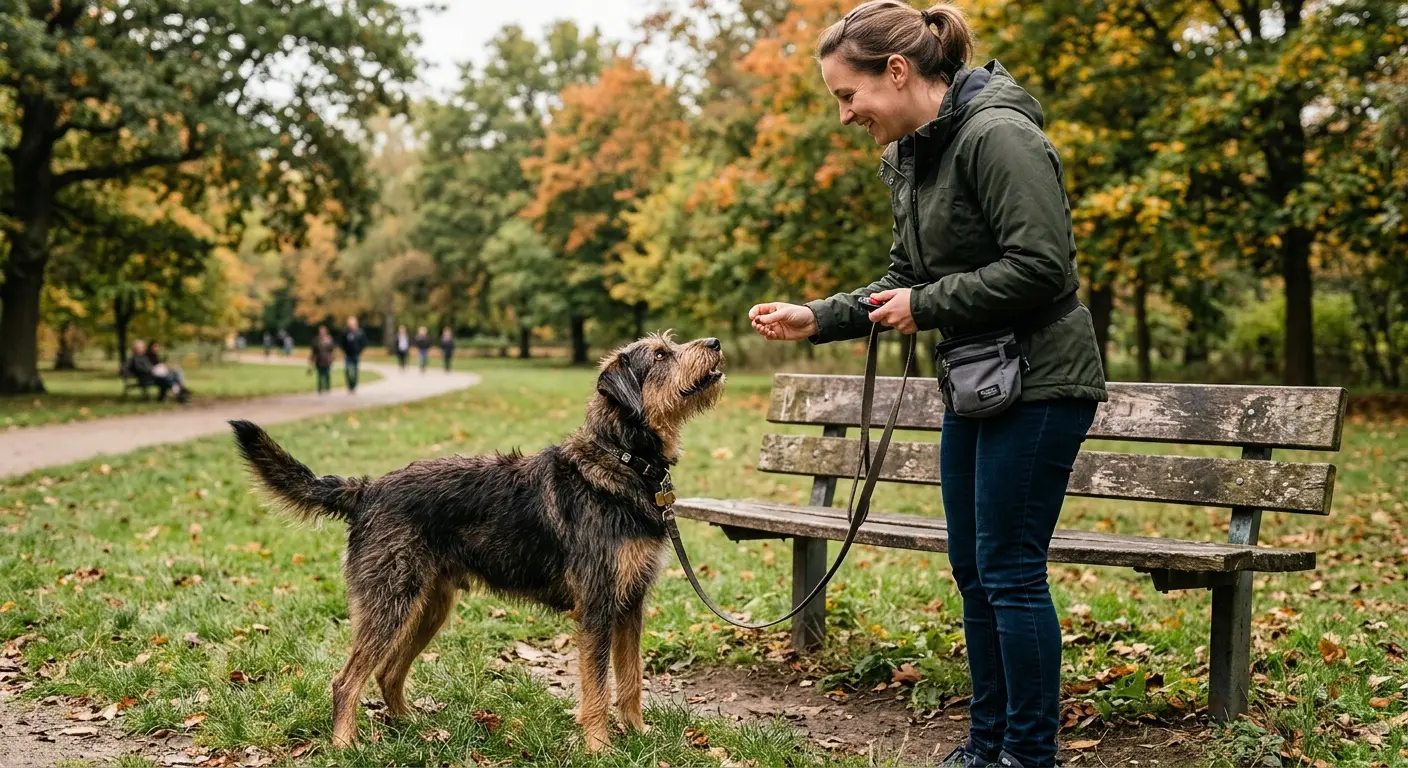
A clicker is a tiny tool that makes a clear, consistent sound. In training, that sound tells your dog: “Yes — that exact thing earned a reward.” It is not a command and it is not a reward by itself. It is a precise bridge between the behaviour and the treat that follows.
First, teach the click to mean treats
Start somewhere quiet with 10–15 small, easy-to-eat treats. Click once, then give your dog a treat. Repeat with no cue and no request. Keep the order the same every time: click, then treat.
After 10 or so repetitions, pause. If your dog looks expectantly toward you after the click, the connection is forming. This is often called charging the clicker. One short session is enough to begin; repeat it over the next day or two if your dog is unsure.
The timing rule that matters most
Click the instant your dog does the right thing — not when they return to you for the treat. If you are teaching sit, click when their bottom touches the ground. Then deliver the treat.
The click ends the job, so your dog may move after hearing it. That is normal. For a position you want them to hold, such as a mat settle, feed the treat where they are after clicking.
Try one easy behaviour
“Hand target” is a friendly first exercise:
- Hold out an open hand a few centimetres from your dog’s nose.
- When their nose touches your hand, click and treat.
- Repeat a few times, then move your hand a little farther away.
- Once they are reliably touching it, say “touch” just before presenting your hand.
Keep sessions to two or three minutes. Stop while your dog is still engaged.
Three common clicker mistakes
- Clicking repeatedly. One correct behaviour gets one click. A rapid stream of clicks blurs the message.
- Clicking after the moment. If timing is hard, choose an easier behaviour or slow down your setup.
- Using the clicker to get attention. Do not click to call your dog over, interrupt barking, or hurry them along. It should predict a reward for a behaviour they have just offered.
You do not need a clicker forever. Once a behaviour is fluent, rewards can become less frequent and a warm “yes” can take over as your marker. But while you are both learning, the clicker gives your dog wonderfully clear feedback.
Ruffy turns that clarity into short, force-free sessions, helping you notice the small wins worth rewarding.
Keep reading
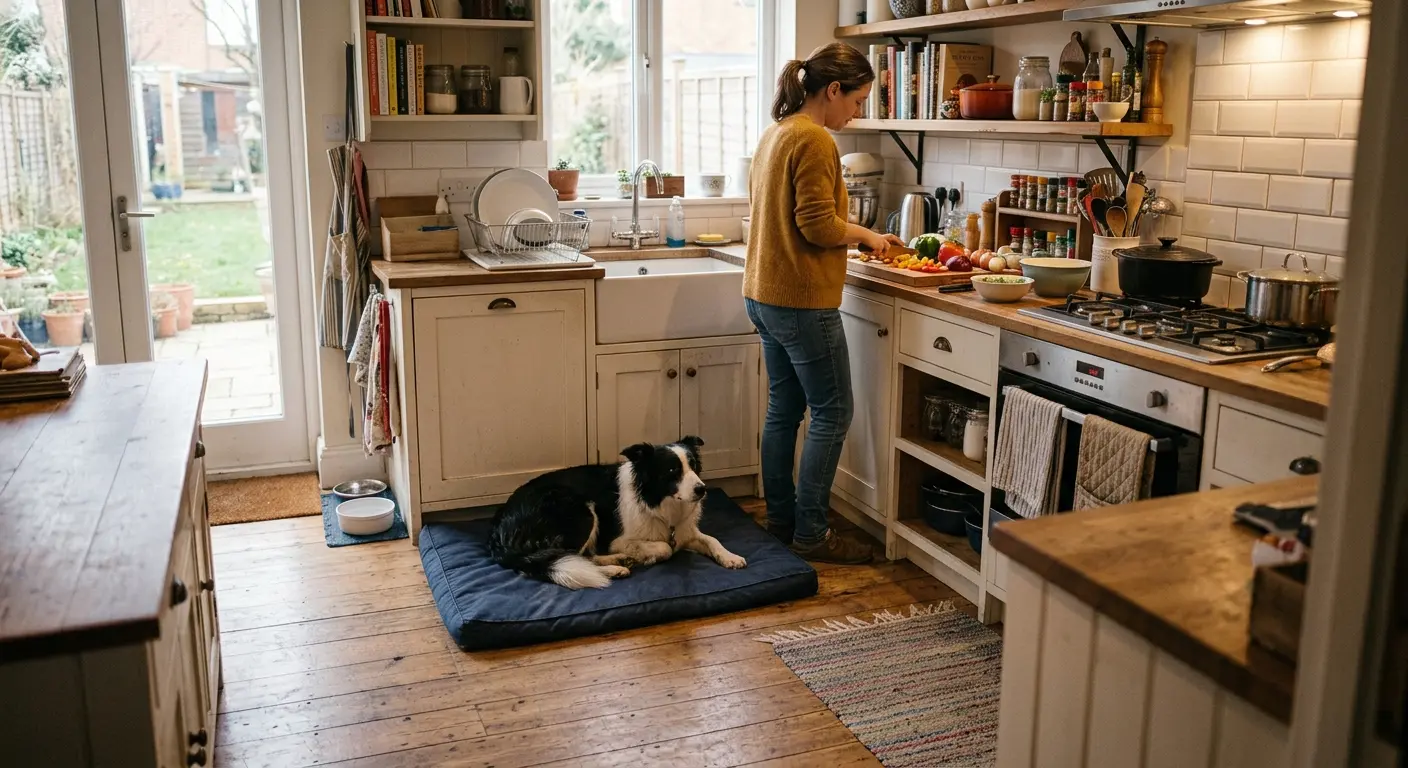
How to Teach Your Dog to Settle on a Mat
A settle-on-a-mat cue gives your dog a calm, safe job when life gets busy. Learn the force-free method, from choosing a mat to using it at home and out.
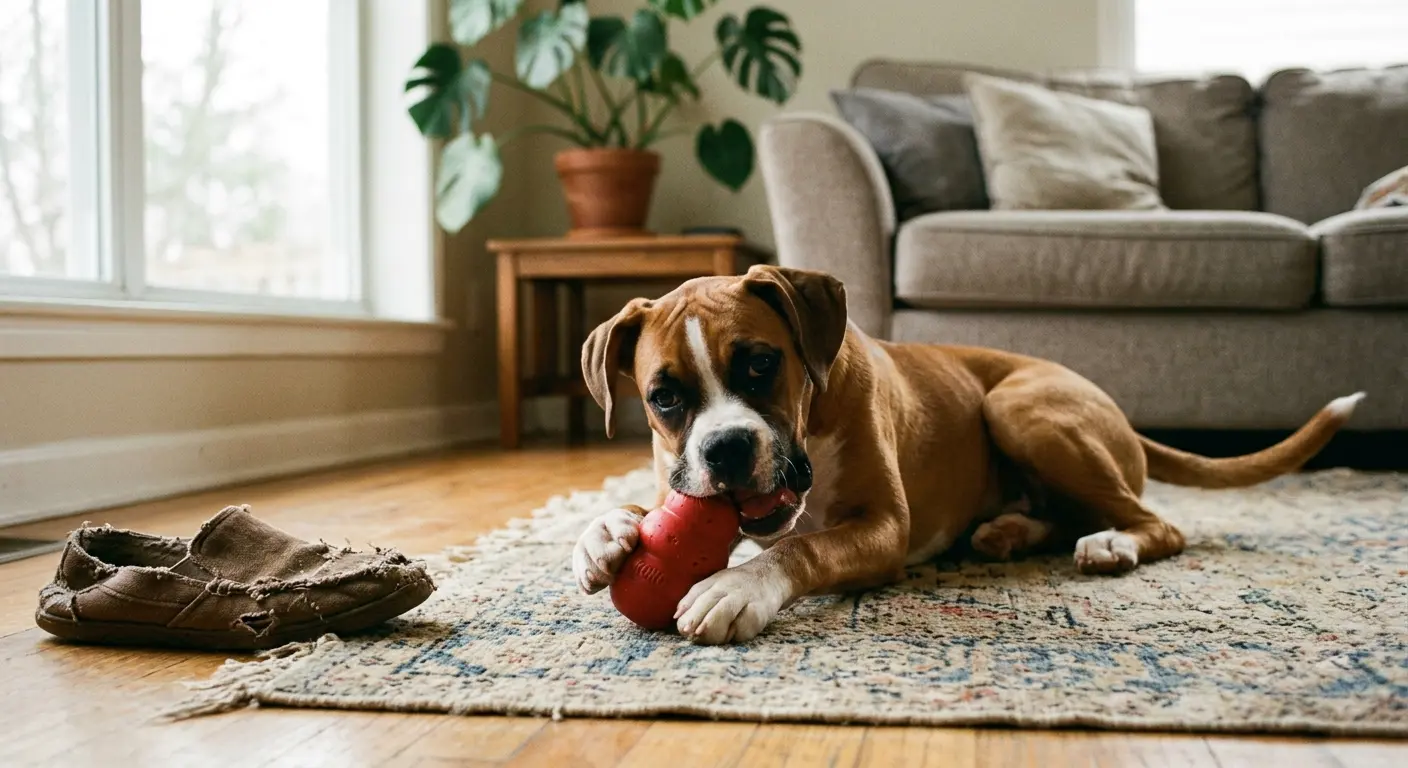
How to Stop a Dog Chewing Everything (Force-Free)
Chewed shoes, table legs and TV remotes? Destructive chewing is normal dog behavior with a fixable cause. Why dogs chew, how to redirect it, and why punishment backfires.
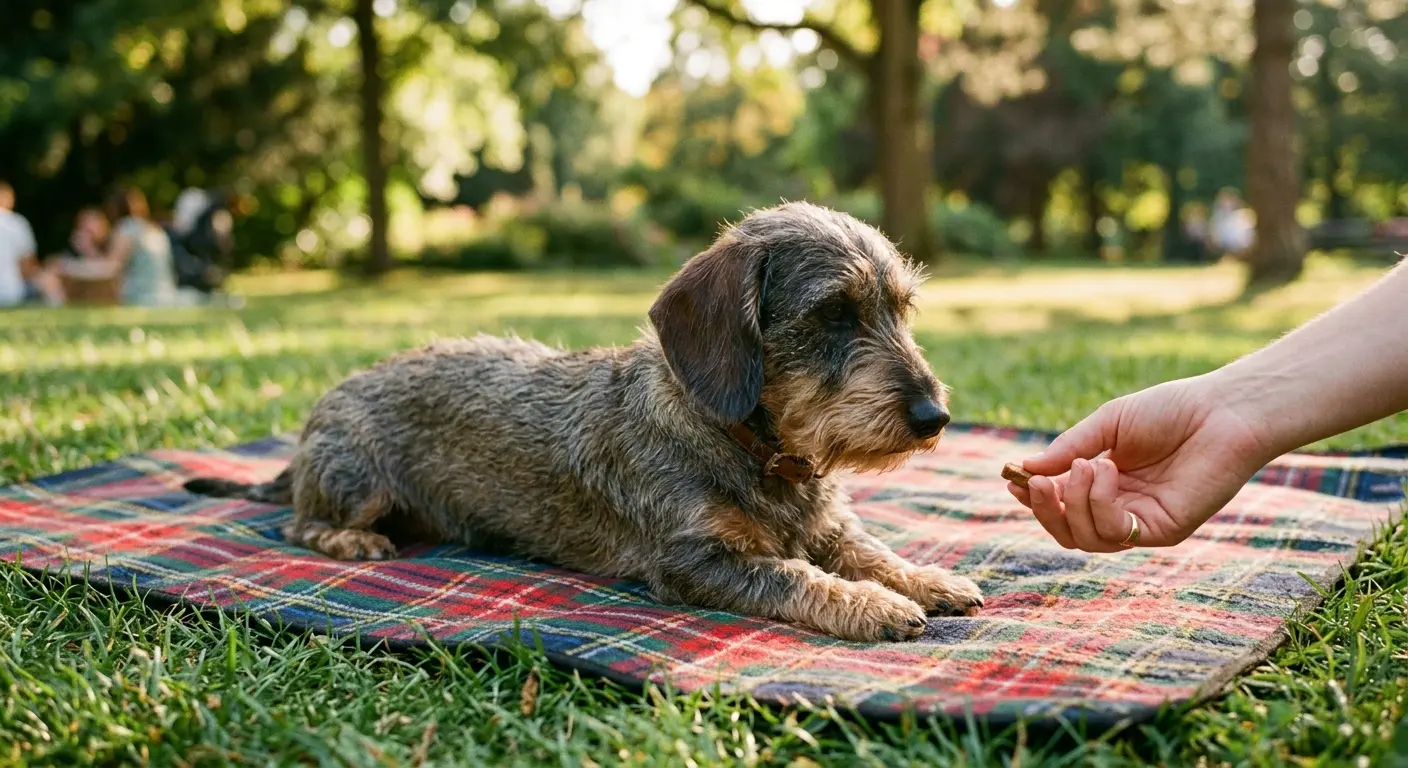
How to Teach Your Dog to Lie Down (the 'Down' Cue)
Down is the calm off-switch of dog training — for the vet, the café, the front door. Here's the force-free way to lure it, fade the treat, and add the word so it actually holds.