


How to Crate Train a Puppy: A Calm, Step-by-Step Guide
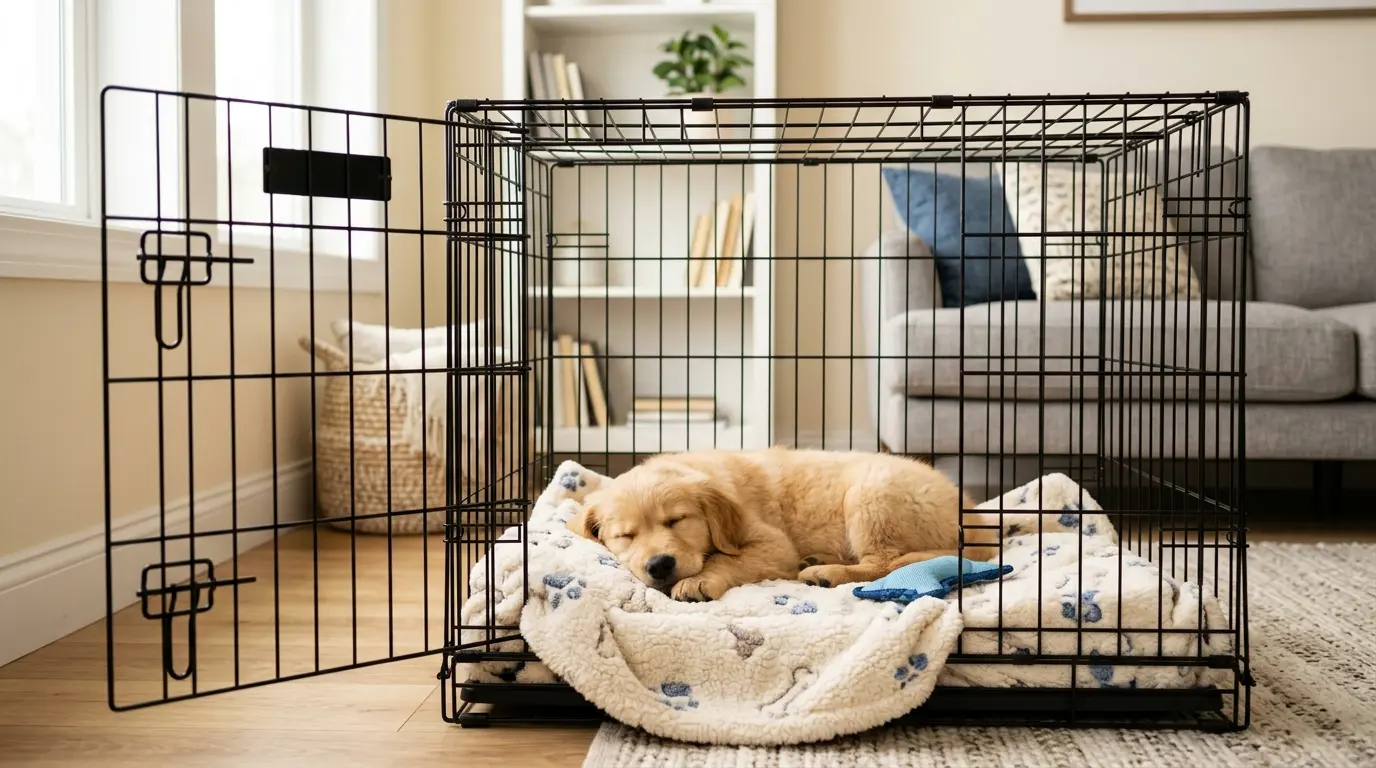
Done right, a crate isn’t a cage — it’s a cozy den your puppy chooses for themselves. Crate training gives your dog a safe place to rest, makes house training dramatically easier, and keeps your puppy out of trouble when you can’t watch them. Done wrong, it becomes a source of stress and endless whining.
This guide shows you how to crate train a puppy the calm, force-free way — the same approach we teach inside the Ruffy app — so the crate becomes the one place your dog is happiest to be.
Why crate train at all?
Dogs are den animals by instinct. A snug, enclosed space feels safe, not confining. A well-introduced crate gives you:
- Faster potty training. Puppies avoid soiling where they sleep, so a correctly sized crate builds bladder control. (It pairs perfectly with our step-by-step potty training guide.)
- A safe space when you’re out. No chewed cables, swallowed socks, or destroyed shoes.
- Easier travel and vet visits. A dog who loves their crate travels calmly.
- A built-in off switch. Over-tired puppies, like toddlers, need a quiet place to wind down.
Choosing the right crate
Size matters more than anything. The crate should be just big enough for your puppy to stand up, turn around, and lie down comfortably — and no bigger. Too much space lets a puppy use one end as a toilet and sleep in the other, which defeats house training.
For a growing puppy, buy a crate sized for their adult weight and use a divider to shrink the usable space, expanding it as they grow. Add a soft, washable bed or blanket, and you’re ready.
Step 1: Make the crate inviting
Never start by shutting your puppy inside. Set the crate up in a room where the family spends time, prop the door open, and let your puppy explore on their own terms.
- Toss a few treats inside and let them wander in to find them.
- Feed meals near, then just inside, then fully inside the crate.
- Leave a special chew or stuffed toy that only appears in the crate.
The goal of the first day or two is simple: the crate predicts good things.
Step 2: Build up time gradually
Once your puppy walks in happily, start closing the door for just a few seconds while they eat or chew, then open it before they get anxious. Slowly stretch the duration:
- A few seconds, then a few minutes, while you sit nearby.
- Short stretches while you move around the room.
- Brief departures from the room entirely.
Always aim to open the door before your puppy starts to fuss, not after — that teaches calm, not panic.
Step 3: Use a cue and a routine
Pick a simple, cheerful cue like “crate” or “bed” and say it as you toss a treat inside. Soon your puppy will trot in on the word alone. Build crate time into the daily rhythm: after meals, after play, and at nap and bedtime. Predictability is what makes the crate feel safe.
Step 4: Master the overnight crate
For the first nights, place the crate in your bedroom so your puppy isn’t isolated. They’ll settle faster knowing you’re near, and you’ll hear when they genuinely need a potty break.
- Take your puppy out to potty right before bed.
- Keep overnight potty trips boring — dim lights, no play, straight back to the crate.
- Gradually move the crate to its permanent spot once your puppy sleeps soundly.
How to handle whining
Whining is the part owners dread most. The key is distinguishing two very different needs:
- “I need the toilet” whining — usually urgent and persistent. Take your puppy out calmly, let them go, and return them to the crate with minimal fuss.
- “I want out” whining — testing whether fussing earns freedom. If you’ve ruled out a genuine need, wait for a pause in the noise, then open the door. Releasing them mid-whine teaches that whining works.
The fix is prevention: by building up crate time slowly and keeping sessions positive, most puppies have little to whine about in the first place.
How long can a puppy stay in a crate?
Crate time should match bladder control. A rough guide: a puppy can hold it for about one hour per month of age, plus one — so a 3-month-old shouldn’t be crated more than three to four hours during the day. Overnight, puppies can usually last a little longer as their systems slow down.
A crate is for rest and short stretches, never an all-day holding pen. Puppies need frequent breaks, exercise, play, and company to thrive.
Common crate training mistakes to avoid
- Using the crate as punishment. It must always be a positive place, never where bad things happen.
- Rushing the timeline. Forcing a frightened puppy inside can set training back weeks.
- Crating too long. Exceeding your puppy’s bladder limit guarantees accidents and stress.
- A crate that’s too big. Extra room undermines house training.
- Releasing during a whine. This rewards exactly the behavior you want to stop.
Train smarter with Ruffy
Crate training is one piece of a confident, well-adjusted dog. Inside the Ruffy app, you’ll find a complete crate-training course alongside lessons on potty training, basic obedience, leash manners, and more — all built on positive reinforcement and designed to fit into just a few minutes a day.
Download Ruffy free and turn the crate into your puppy’s favorite place. A calmer, happier dog is closer than you think. 🐾
Keep reading
How to Potty Train a Puppy: A Complete Step-by-Step Guide
Learn how to potty train your puppy fast with this vet-informed, step-by-step guide. Build a routine, prevent accidents, and use positive reinforcement that actually works.
How to Stop a Dog Pulling on the Leash (Force-Free)
Why dogs pull on the leash — and how to teach loose-leash walking without choke chains or jerks. A calm, science-backed method you can start on your next walk.
Why Is My Dog Scared of Fireworks? (And How to Help)
Why fireworks terrify so many dogs — and what actually helps. A calm, force-free guide to preparing your home, soothing your dog in the moment, and easing the fear long term.