


How to Potty Train a Puppy: A Complete Step-by-Step Guide
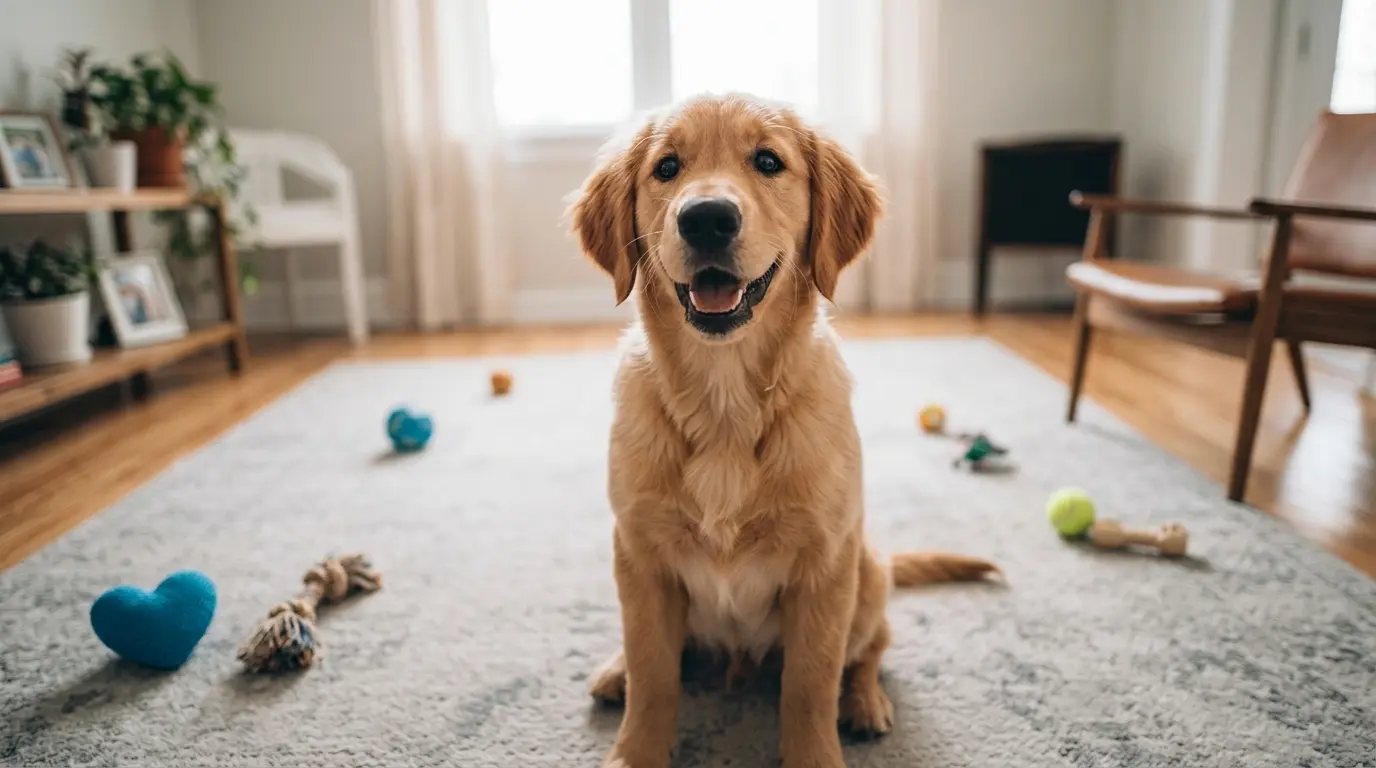
Bringing home a new puppy is one of life’s great joys — right up until the first puddle appears on the rug. The good news? Potty training is one of the most predictable parts of raising a dog. With a consistent routine and plenty of positive reinforcement, most puppies are reliably house trained within four to six months.
This guide walks you through exactly how to potty train a puppy, step by step, using the same force-free, science-backed approach we teach inside the Ruffy app.
When can you start potty training a puppy?
You can start the day your puppy comes home, usually around 8 weeks old. At this age puppies have small bladders and limited control, so the goal early on isn’t perfection — it’s building good habits and preventing accidents before they become a pattern.
A rough rule of thumb for bladder control: a puppy can typically “hold it” for about one hour per month of age, plus one. So a 2-month-old puppy may need a break roughly every two to three hours, including overnight.
What you’ll need
Before you begin, set yourself up for success:
- A consistent potty spot — one specific area outside (or a pad area if you’re pad training).
- High-value treats — small, soft, and reserved just for potty wins.
- A crate or playpen appropriately sized so your puppy can stand, turn, and lie down, but not much more.
- An enzymatic cleaner to fully eliminate odors from accidents (regular cleaners leave scents that invite repeat visits).
- A simple log or app to track when your puppy eats, drinks, and goes.
Step 1: Build a predictable routine
Puppies thrive on routine, and a predictable schedule is the single biggest factor in fast potty training. Take your puppy to the same spot:
- First thing in the morning
- After every meal and drink
- After waking from a nap
- After play or excitement
- Before bedtime
- Every 1–2 hours in between while they’re young
Feeding on a schedule (rather than free-feeding) makes potty timing far more predictable. What goes in on a schedule comes out on a schedule.
Step 2: Choose and use one potty spot
Always take your puppy to the same location. The lingering scent reminds them what the spot is for and helps trigger the behavior. Walk them there on a leash rather than letting them wander — this keeps the trip focused on the task, not on exploring.
Step 3: Reward the moment it happens
This is where most owners go wrong: they wait until the puppy comes back inside to celebrate. By then, the puppy has no idea what the reward is for.
Instead, reward the instant your puppy finishes going, right there in the spot. Calmly praise and deliver a treat within two to three seconds. That tight timing is what teaches your puppy that going in this spot is what earns the good stuff.
You can also add a gentle cue word like “go potty” as they start, so that over time you can prompt the behavior on command.
Step 4: Supervise, confine, repeat
Between potty breaks, your puppy should be either actively supervised or comfortably confined in a crate or playpen. Puppies instinctively avoid soiling where they sleep, so a correctly sized crate teaches them to hold it for short stretches.
Watch for the tell-tale signs that a break is needed:
- Sudden sniffing or circling
- Whining or restlessness
- Heading toward a previous accident spot
- Pausing mid-play
Spot the signs, scoop them up, and head straight to the potty spot.
Step 5: Handle accidents the right way
Accidents will happen — they’re part of the process, not a sign of failure. When one does:
- Never punish or scold. Punishment teaches your puppy to fear going in front of you, which leads to hidden accidents and slower progress.
- Interrupt gently if you catch them in the act — a calm “oops!” — then carry them to the right spot to finish.
- Clean thoroughly with an enzymatic cleaner so no scent remains.
If you find an accident after the fact, simply clean it up. There’s nothing to teach after the moment has passed.
Overnight potty training
Puppies can’t last a full night at first. Set a quiet alarm for one overnight break, keep the trip boring (no play, dim lights, straight back to the crate), and gradually stretch the interval as your puppy grows. Most puppies sleep through the night by around 4 months.
How long does potty training take?
With consistency, many puppies are mostly reliable within a few weeks, and fully house trained by 4 to 6 months. Larger breeds and easily distracted pups may take a little longer. Progress is rarely a straight line — expect the occasional setback, especially during teething, environment changes, or busy days.
The owners who succeed fastest all share one thing: they’re consistent. Same spots, same timing, same rewards, every single day.
Common potty training mistakes to avoid
- Punishing accidents — slows progress and damages trust.
- Inconsistent timing — confuses your puppy and invites accidents.
- Rewarding too late — your puppy can’t connect the treat to the behavior.
- Giving too much freedom too soon — unsupervised roaming is a recipe for hidden accidents.
- Skipping the deep clean — leftover odor draws repeat offenses.
Train smarter with Ruffy
Potty training is just the beginning. Inside the Ruffy app, you’ll find a complete, step-by-step house-training course alongside lessons on crate training, basic obedience, leash manners, and more — all built on positive reinforcement and designed to fit into just a few minutes a day.
Download Ruffy free and give your puppy the best possible start. A happier, better-trained dog is closer than you think. 🐾
Keep reading
How to Crate Train a Puppy: A Calm, Step-by-Step Guide
Learn how to crate train your puppy the gentle way. A vet-informed, step-by-step plan to build a safe den, stop the whining, and make the crate your puppy's favorite place.
How to Stop a Dog Pulling on the Leash (Force-Free)
Why dogs pull on the leash — and how to teach loose-leash walking without choke chains or jerks. A calm, science-backed method you can start on your next walk.
Why Is My Dog Scared of Fireworks? (And How to Help)
Why fireworks terrify so many dogs — and what actually helps. A calm, force-free guide to preparing your home, soothing your dog in the moment, and easing the fear long term.