


Why Is My Dog Scared of Fireworks? (And How to Help)

If your dog trembles, hides, or paces the moment fireworks start, you’re not doing anything wrong — and you’re far from alone. Fear of fireworks is one of the most common behavior problems owners face, affecting a large share of dogs to some degree. The good news is that with a little preparation and a calm, force-free approach, you can make these nights far less frightening for your dog.
Why are dogs so scared of fireworks?
It helps to see the world the way your dog does. Fireworks tick almost every box for what a dog’s brain registers as a threat:
- They’re sudden and unpredictable. There’s no warning bang, no pattern, no way to brace for the next one. Unpredictable loud noises are far more stressful than steady ones.
- They’re genuinely loud. Dogs hear a much wider range of sound than we do, so a blast that’s startling to us can be overwhelming to them.
- There’s no escape and no explanation. Your dog can’t understand why the sky is exploding, and running away doesn’t make it stop. That loss of control fuels panic.
- It’s more than noise. Flashes of light, the smell of smoke, and even the faint vibration of big blasts all add to the sensory overload.
On top of all that, the instinct to startle at sudden noise is deeply wired in — it once kept animals alive. So a fearful reaction isn’t your dog “being dramatic”; it’s a normal nervous system doing exactly what it evolved to do.
How to tell if your dog is frightened
Fear doesn’t always look like cowering in a corner. Many dogs show quieter signs of stress that are easy to miss, and catching them early lets you help sooner.
| Subtle signs | Obvious signs of distress |
|---|---|
| Lip licking, yawning, lowered ears | Trembling or shaking |
| Panting when it isn’t hot | Hiding or trying to escape |
| Pacing or restlessness | Whining, barking, or howling |
| Clinginess, following you around | Drooling, refusing food or treats |
| ”Whale eye” (whites of the eyes showing) | Destructive behavior or accidents indoors |
If you see the subtle signs, treat them as a cue to step in with calm support before the fear escalates.
Before the fireworks: set the stage
Most of the work happens before the first bang. A little preparation goes a long way.
- Build a safe den. Set up a cozy, enclosed spot — a covered crate, a corner with blankets, or wherever your dog already likes to hide. Let them choose to use it; never shut them in.
- Exercise earlier in the day. A good walk and some sniffing before dusk burns off energy and leaves your dog more relaxed. Take that walk well before fireworks are likely to start.
- Feed and potty early. A frightened dog may refuse food and won’t want to go outside once the noise begins.
- Muffle the outside world. Close windows, curtains, and blinds to dampen sound and block the flashes. Turn on the TV, music, or white noise to mask the bangs.
- Secure your home. More dogs go missing around fireworks than almost any other time. Keep doors and gates shut, and make sure ID tags and microchip details are up to date — just in case.
- Prepare calming aids. Pressure wraps, calming pheromone diffusers, and long-lasting chews can take the edge off for some dogs. For dogs with severe fear, talk to your vet ahead of time about anti-anxiety options — these work best when planned, not improvised on the night.
During the fireworks: how to help
When the noise starts, your job is to be a calm, steady anchor:
- Stay relaxed yourself. Dogs read our body language closely. Keep your tone light and your movements unhurried.
- Let your dog hide. If they want to bolt for their den or squeeze behind the sofa, let them. Hiding is a healthy coping strategy, not something to discourage.
- Comfort them if they seek it. If your dog comes to you, it’s absolutely fine to soothe them with a calm voice and gentle contact (more on this myth below).
- Offer a distraction. Some dogs will happily take a stuffed chew, a lick mat, or a low-key game. If yours engages, great — if they’re too scared to care, don’t force it.
- Never punish fear. Scolding a frightened dog only adds your displeasure to an already terrifying situation and makes the fear worse.
- Don’t force them outside. Keep potty trips before the fireworks start, and keep your dog leashed if they must go out during a lull.
“Won’t comforting my dog reinforce the fear?” This is one of the most persistent myths in dog training. You cannot reinforce an emotion like fear by offering comfort — reassurance doesn’t teach a dog to be more afraid. Reward-based reinforcement applies to behaviors, not feelings. If your dog finds comfort in being near you, providing it is kind and helpful, full stop.
When it’s more than just fireworks
For some dogs, fireworks are part of a bigger sensitivity to loud noises — thunderstorms, gunshots, even garbage trucks. If your dog’s fear is severe, getting worse over time, or spilling into everyday life, it’s worth getting professional help.
Talk to your vet to rule out any underlying issue and discuss medication for high-stress events. For deep-rooted noise phobia, a certified, force-free behaviorist can build a tailored plan. Reaching out isn’t a failure — it’s the kindest, fastest route to relief for a genuinely frightened dog.
The long game: helping your dog feel safe
Coping strategies get you through the night, but you can also reduce the fear itself over time. The proven, force-free method is gradual desensitization paired with counterconditioning — and the best time to start is well outside fireworks season:
- Play a recording of fireworks at a volume so low your dog barely notices it.
- Pair that quiet sound with great things — treats, play, calm praise.
- Over many short sessions, raise the volume only as fast as your dog stays relaxed.
Done patiently, this teaches your dog’s brain a new association: that distant booms predict good things, not danger. It takes weeks to months, not days — but it’s the closest thing to a real, lasting fix.
Help your dog feel safe with Ruffy
A confident dog is built day by day, long before the next big night. Inside the Ruffy app, you’ll find force-free lessons on noise sensitivity, building confidence, and calm behavior — alongside courses on the everyday skills that make life easier for both of you, all in just a few minutes a day.
Download Ruffy free and start helping your dog feel safe, one calm session at a time. 🐾
Keep reading
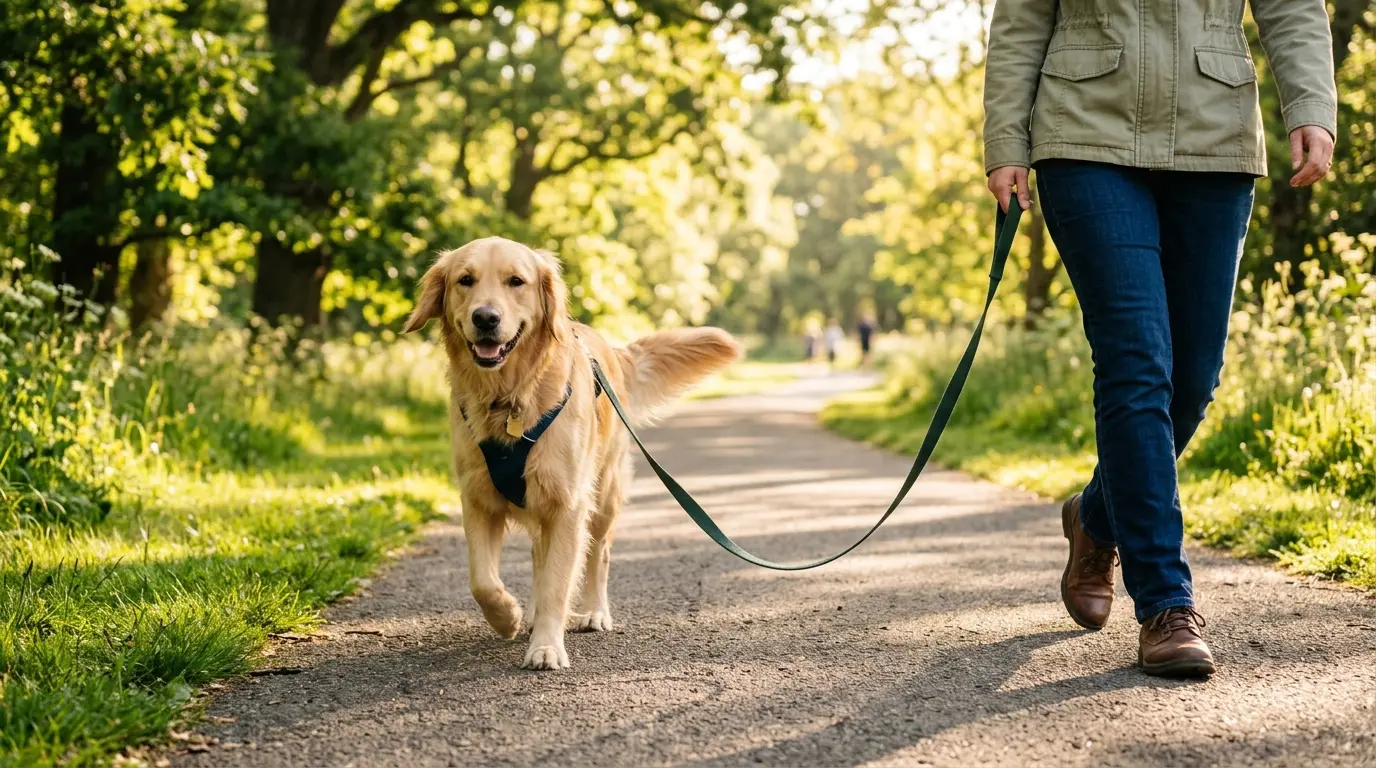
How to Stop a Dog Pulling on the Leash (Force-Free)
Why dogs pull on the leash — and how to teach loose-leash walking without choke chains or jerks. A calm, science-backed method you can start on your next walk.
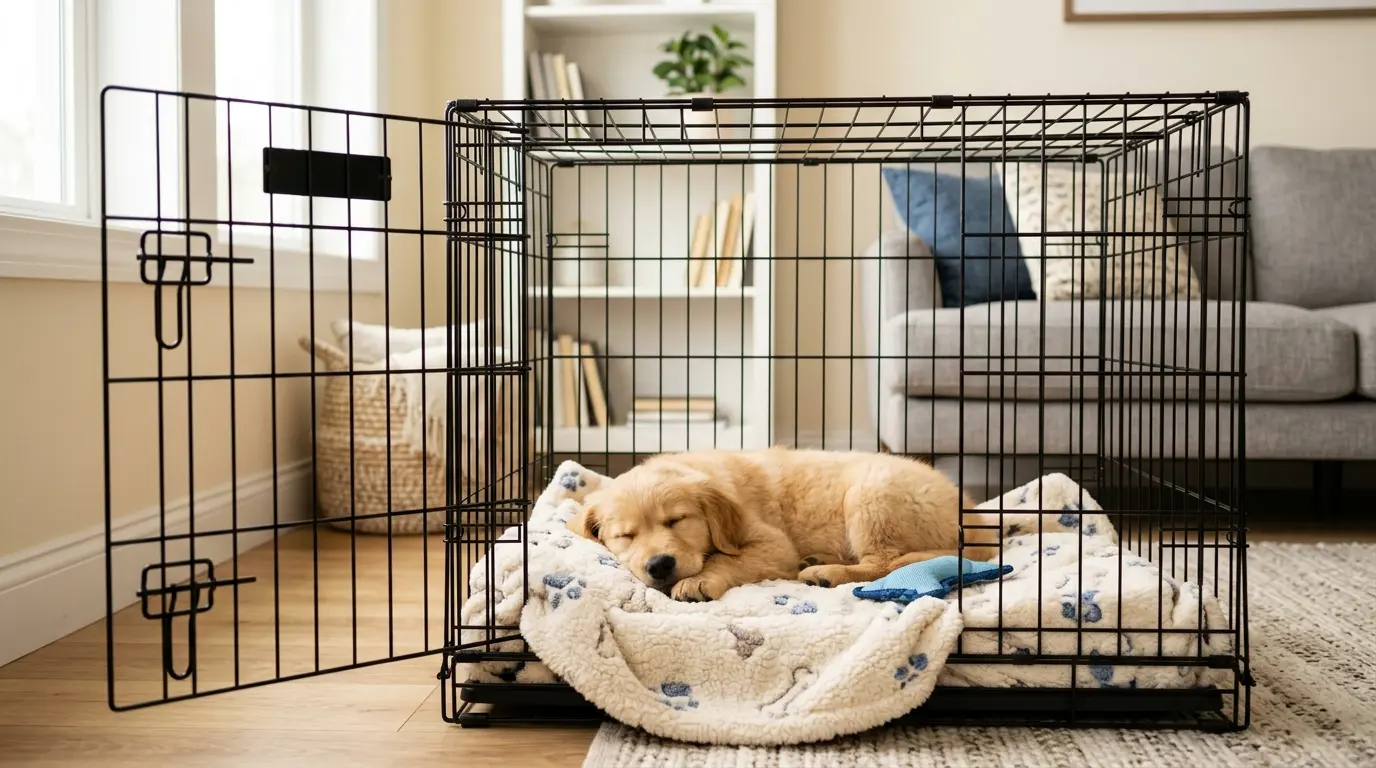
How to Crate Train a Puppy: A Calm, Step-by-Step Guide
Learn how to crate train your puppy the gentle way. A vet-informed, step-by-step plan to build a safe den, stop the whining, and make the crate your puppy's favorite place.

How to Potty Train a Puppy: A Complete Step-by-Step Guide
Learn how to potty train your puppy fast with this vet-informed, step-by-step guide. Build a routine, prevent accidents, and use positive reinforcement that actually works.