
How to Teach Your Dog to Come When Called (a Reliable Recall)
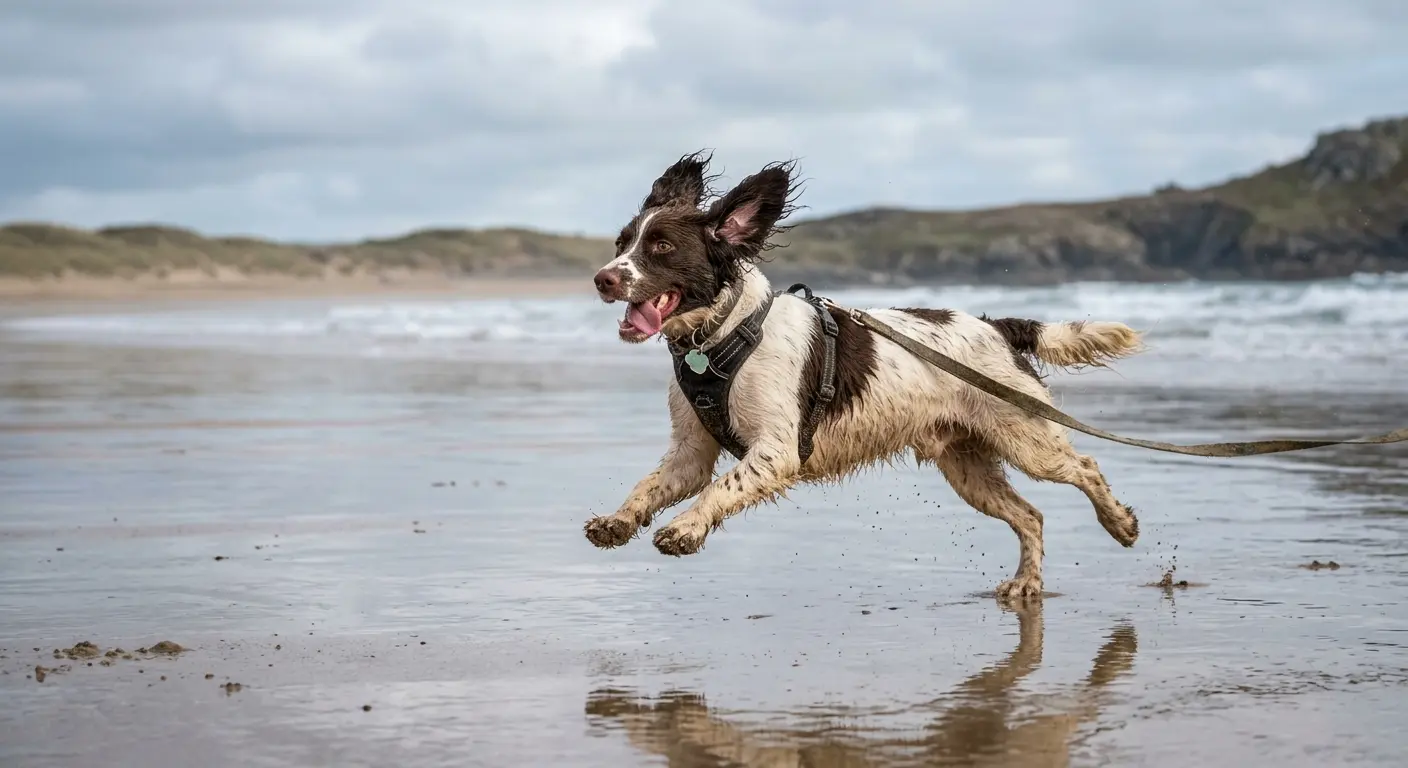
A reliable recall — your dog turning on a dime and running back to you the moment you call — is arguably the single most useful thing you can teach. It’s what lets you give your dog freedom safely, and it’s the skill that can keep them out of danger when it really counts. The good news: it’s very trainable. The catch: it’s also the skill people accidentally break the most, usually without realizing it.
Why most recalls fall apart
If your dog “knows” come but ignores you at the park, you’re not alone — and your dog isn’t being stubborn. Recall usually breaks down for one of a few very predictable reasons:
- The word got “poisoned.” If “come” has ever reliably predicted something the dog dislikes — the end of playtime, a bath, going back on leash, being told off — the word itself starts to mean the fun stops. Dogs vote with their feet.
- You only practice in hard situations. Calling your dog for the first time when there’s a squirrel, another dog, and interesting smells is like taking a driving test before the first lesson.
- Coming back was never worth it. If returning earns a pat on the head while the squirrel offered a full-body thrill, the squirrel wins. Recall competes with the environment, and the environment is often very good.
Fix those three things and most of the problem disappears. The rules below are built around exactly that.
The golden rules of recall
These matter more than any single technique. Get them right and the training almost takes care of itself.
- Coming back always pays — every single time. Treats, a game, praise, freedom to go back to sniffing. Especially early on, make it wildly worth it. This is not the place to be stingy.
- Never call your dog for something they’ll dislike. Going in the crate, nail trims, leaving the park — go and get them, or use a different, casual word. Protect the recall word.
- Never punish a dog who comes back late. If you’re frustrated when they finally arrive, you’ve just taught them that coming to you is risky. However long it took, reward the fact that they came.
- Don’t repeat the cue over and over. “Come… come… come… COME!” teaches your dog the word is background noise. Say it once, then help them succeed.
- Set the difficulty so they can win. Only make it harder when the current level is easy. Success builds a dog who expects coming back to be a good idea.
Choose your recall word and load it up
Pick a clear, distinct word or sound you’ll only use for recall — “come,” “here,” or even a whistle. If your everyday word is already poisoned, just start fresh with a new one.
Before you ask for anything, spend a few days simply teaching your dog that the word means amazing things happen. Say the word, then immediately give a great treat. Word, treat. Word, treat. Ten reps, a few times a day, in a calm room. You’re not asking the dog to do anything yet — you’re building an automatic, happy reaction to the sound itself.
Build it step by step
Once the word predicts good things, start adding distance and distraction — but only one step at a time. A rough progression:
| Stage | Where | Distance & distraction | Goal |
|---|---|---|---|
| 1 | Quiet room at home | A few steps, no distractions | Dog turns and comes for a treat every time |
| 2 | Around the house / garden | Across the room, then out of sight | Comes from another room, past mild distractions |
| 3 | Garden or quiet outdoor space | 5–10 metres, everyday distractions | Comes away from sniffing and low-level interest |
| 4 | On a long line, quiet park | 10–20 metres, real-world distractions | Comes past other people, calm dogs, smells |
| 5 | Long line, busier environments | Longer distance, strong distractions | Comes reliably before you trust off-leash |
The key idea: don’t skip stages, and drop back a level whenever your dog struggles. If they blow you off at stage 4, you’re not failing — you’ve just found the edge of what they can do, and stage 3 needs more reps.
Use a long line as a safety net
A long training line (a 5–10 metre lead, not a retractable) is the bridge between the garden and true off-leash freedom. It gives your dog the feeling of freedom while guaranteeing they can’t self-reward by running off — which means every recall still succeeds. Let it trail on the ground, and only ever guide gently; never yank.
Games that build a great recall
Recall sticks far better when it’s a game your dog loves than when it’s an obedience drill.
- Ping-pong recall. With two people, take turns calling the dog back and forth between you, rewarding each arrival. Fast, fun, and full of easy wins.
- The “find me” game. In a safe space, duck behind a tree or a doorway and call once. Being found becomes a little thrill, and it teaches your dog to keep track of you.
- Chase the other way. When your dog comes toward you, jog backwards a few steps. Dogs love to chase movement, and it turns recall into a game they want to play.
- The premium jackpot. Every so often, when they come back especially fast, throw a “jackpot” — a handful of treats, one after another, or their favorite toy. Occasional big wins keep the whole behavior strong.
Common mistakes that quietly ruin recall
- Only calling to end the fun. If the only time you call at the park is to clip the leash and leave, your dog learns the pattern fast. Call them back often during play just to reward and release them again.
- Reaching for the collar as they arrive. Many dogs learn to stop just out of reach. Reward first, and teach a calm “touch my hand” or collar-hold as its own rewarded step.
- Going off-leash too soon. Off-leash freedom is earned at the end of the process, not assumed at the start. When in doubt, stay on the long line another few weeks.
- Practicing only when you need it. Ninety percent of your recalls should be easy, no-stakes reps that pay well. Then the emergency recall has a deep bank of good history to draw on.
Safety note Until your dog’s recall is genuinely reliable in a given environment, keep them on a long line there. A recall that works in the garden does not automatically work next to a road or livestock — and those are exactly the places where a miss matters most. Build the reliability first, then trust it.
Build a rock-solid recall with Ruffy
Recall is a perfect example of how the small stuff compounds: a few focused, upbeat minutes a day, in the right order, turns into a dog who comes running no matter what. Inside the Ruffy app, you’ll find force-free, step-by-step recall training that walks you through exactly this progression — from the first “word means treats” reps to real-world distractions — alongside all your dog’s other foundational skills.
Download Ruffy free and build a recall you can actually rely on. 🐾
Keep reading
How to Stop Your Dog Jumping Up on People (Force-Free)
Dogs jump up to greet us — it's excitement, not bad manners. A calm, force-free guide to why it happens and how to teach four paws on the floor, at the door and everywhere else.
How to Clicker Train Your Dog: A Simple Beginner’s Guide
Learn how to charge a clicker, time your marker, and use clicker training to teach your dog without force or confusion.
How to Teach Your Dog to Settle on a Mat
A settle-on-a-mat cue gives your dog a calm, safe job when life gets busy. Learn the force-free method, from choosing a mat to using it at home and out.