


Why Does My Dog Bark So Much? (And How to Stop It)
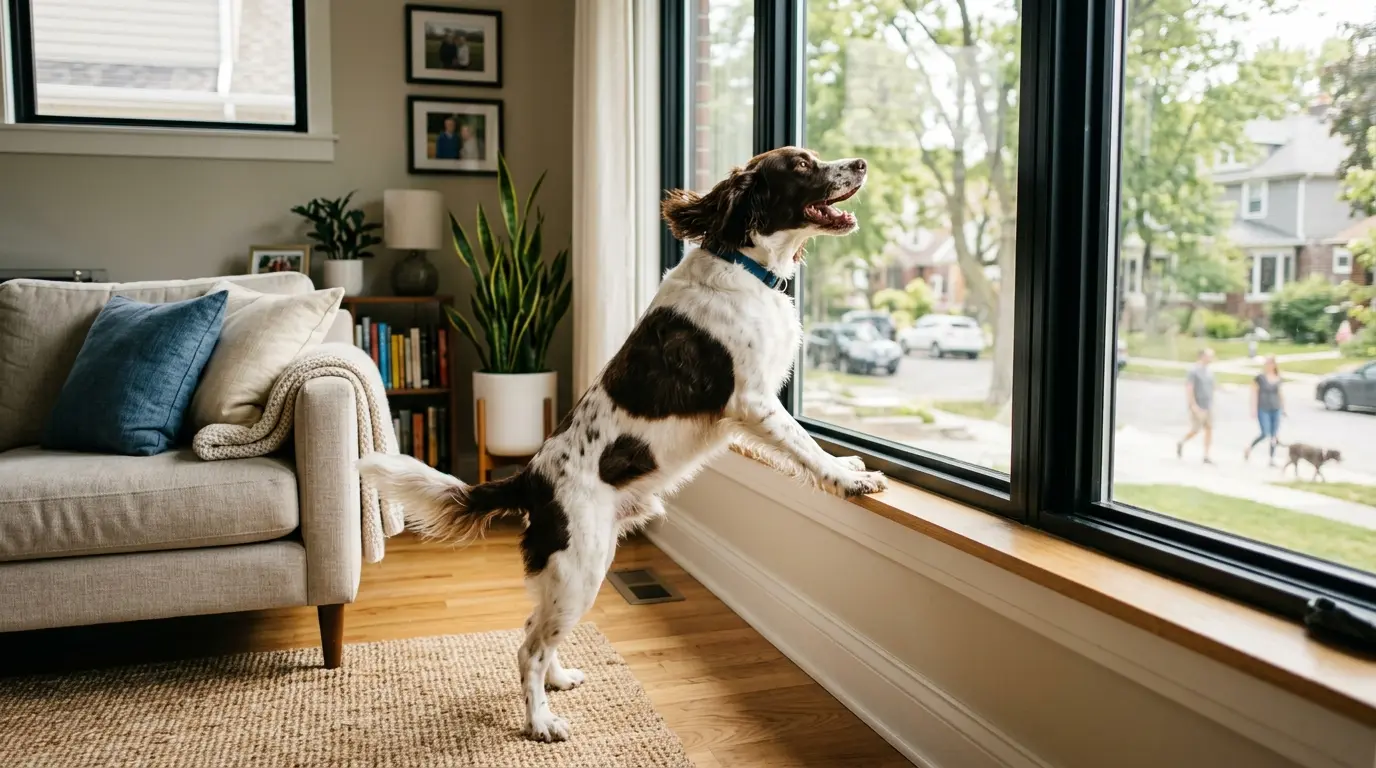
Barking can drive you up the wall — and worry you that something’s wrong. But here’s the thing to hold onto: barking isn’t bad behavior. It’s communication. Your dog is telling you (or the squirrel, or the mail carrier) something. The reason “stop barking” tips so often fail is that they treat every bark the same. They don’t. A dog barking from boredom needs the opposite of a dog barking from fear.
So before you can quiet the barking, you have to answer one question: why is my dog barking? Get that right and the fix usually follows.
First, two rules that apply to every kind of barking
No matter the cause, two things will either help you or sink you:
- Don’t yell. To your dog, shouting “No!” sounds like you joining in — you’re barking too. At best it does nothing; at worst it rewards the very behavior you want to stop.
- Never punish a frightened or anxious bark. Punishment can silence the noise while leaving the fear underneath intact (or making it worse). You want to change how your dog feels, not just mute the sound.
The force-free approach is always the same shape: figure out the need behind the bark, meet that need, and reward the quiet you want to see more of.
Find your dog’s reason
Most problem barking falls into one of these buckets. Watch when and where it happens — the trigger is your biggest clue.
| Type of barking | What it looks like | What your dog is saying |
|---|---|---|
| Alarm / territorial | Sharp bursts at the window, door, fence, or passers-by | ”Something’s here — I’m on it!” |
| Boredom / under-stimulation | Long, repetitive barking, often when left alone or ignored | ”I have nothing to do.” |
| Attention-seeking / demand | Barking at you, often with eye contact, stops when you engage | ”Look at me. Feed me. Play with me.” |
| Fear / anxiety | Backing away, tucked tail, barking at strangers, noises, or being left alone | ”I’m scared — keep away,” or “Don’t leave me.” |
| Frustration / excitement | Barking on the leash at other dogs, or behind a barrier | ”I want to get to that and I can’t!” |
| Greeting / play | Happy, bouncy barking when you come home or during play | ”You’re back! This is great!” |
If you’re not sure which one you’re dealing with, jot down the next handful of barking episodes: time, place, what just happened. The pattern usually jumps out fast.
Alarm and territorial barking
This is the doorbell-and-window bark. Your dog spots or hears something, sounds the alarm, and often can’t stop because the trigger is still there.
What helps:
- Manage the view. If your dog patrols the front window all day, frost the lower glass, close the blinds, or block access to that room. Less to react to means less to bark at.
- Teach “thank you.” Calmly acknowledge the alert (“thank you”), then call your dog away and reward them for coming. You’re not arguing with the bark — you’re giving it an off-switch.
- Reward the noticing, not the barking. When your dog sees the trigger and looks at you instead of erupting, mark it (“yes!”) and treat. Over time, “something’s out there” becomes a cue to check in with you, not to sound off.
Boredom and pent-up energy
A dog with nothing to do will make their own entertainment, and barking is free. This is one of the most common reasons for relentless barking, especially when a dog is left alone.
What helps:
- Spend the energy. Most barky, restless dogs are under-exercised. Add a real walk, a game of fetch, or some off-leash time before the hours they tend to bark.
- Work the brain too. Mental tiredness beats physical tiredness for many dogs. A food puzzle, a snuffle mat, a scatter-feed in the grass, or a five-minute training session can settle a dog more than a long walk.
- Make alone-time enjoyable. A stuffed chew or lick mat given right as you leave gives a bored dog a job and a good association with being on their own.
Attention-seeking and demand barking
If your dog barks at you and stops the second you look up, talk, or hand over a toy — congratulations, you’ve trained them, just not on purpose. Any response, even an annoyed one, is the payoff.
What helps:
- Ignore the bark completely. No eye contact, no talking, no touching. Wait for even a second of quiet, then immediately give attention. You’re flipping the rule: quiet earns the reward, barking earns nothing.
- Expect an “extinction burst.” When the barking stops working, it usually gets louder before it fades — that’s the sign it’s working. Don’t cave here, or you’ll teach your dog that longer, louder barking is what pays off.
- Get ahead of it. Reward calm, quiet moments before your dog feels the need to demand. Attention they can earn by being settled is attention they don’t have to bark for.
Fear and anxiety barking
This bark comes with worried body language — a tucked tail, a lowered body, backing away, hackles up. The dog isn’t being bossy; they’re scared and asking for space. Separation-related barking when you leave belongs here too.
What helps:
- Add distance. Move your dog away from whatever frightens them until they’re calm enough to think. You can’t train a panicking dog.
- Change the feeling, not just the noise. Pair the scary thing (at a safe distance) with something wonderful — treats, play. Done patiently, this is desensitization and counterconditioning, and it teaches your dog that the trigger predicts good things. We cover the same method in our fireworks guide.
- Never punish it. Punishing a fearful bark teaches your dog that the scary thing and your reaction are both bad news. For separation-related barking, or fear that’s severe or growing, loop in your vet and a certified force-free behaviorist.
Frustration and excitement barking
The classic here is the dog who loses it on the leash at other dogs — not aggression, but thwarted longing. They desperately want to say hello (or chase, or play) and the leash won’t let them.
What helps:
- Create space before the meltdown. Spot the trigger early and calmly increase distance before your dog tips over threshold. Reward them for noticing and staying loose.
- Reward the calm look. The instant your dog sees the other dog and stays relaxed, mark and treat. You’re building a new habit: “see the exciting thing → check in with my human.”
- Don’t flood them. Repeatedly dragging an over-aroused dog past their triggers makes things worse. Work at a distance where they can still listen, and shrink it slowly.
When to get extra help
Reach out to your vet or a certified, force-free trainer or behaviorist if:
- The barking is sudden and new — a change in barking can signal pain or illness, so a vet check comes first.
- It’s tied to fear, anxiety, or being left alone, and isn’t improving.
- It’s escalating or starting to affect your dog’s quality of life (or your own).
Asking for help isn’t a failure — for anxiety-driven barking especially, it’s often the fastest route to relief.
Quieter days with Ruffy
Barking is one of the most common reasons owners look for training help — and one of the most fixable, once you know the why behind it. Inside the Ruffy app, you’ll find force-free, step-by-step lessons for exactly these situations: settling alarm barking, building calm around triggers, and teaching a reliable “quiet” — alongside courses on focus, confidence, and everyday manners, in just a few minutes a day.
Download Ruffy free and start turning down the volume, one calm session at a time. 🐾
Keep reading

How to Stop a Dog Pulling on the Leash (Force-Free)
Why dogs pull on the leash — and how to teach loose-leash walking without choke chains or jerks. A calm, science-backed method you can start on your next walk.

Why Is My Dog Scared of Fireworks? (And How to Help)
Why fireworks terrify so many dogs — and what actually helps. A calm, force-free guide to preparing your home, soothing your dog in the moment, and easing the fear long term.

How to Crate Train a Puppy: A Calm, Step-by-Step Guide
Learn how to crate train your puppy the gentle way. A vet-informed, step-by-step plan to build a safe den, stop the whining, and make the crate your puppy's favorite place.